
A car can travel perfectly, level accurately, and still leave a building with an elevator problem if its doors are slow, erratic, or unable to close. Elevator door operators control one of the most heavily used parts of the system: the opening and closing of car doors at every landing. When they are not performing correctly, tenants notice it immediately, accessibility can be affected, and a minor issue can quickly become a service interruption.
For property owners and facility teams, door performance should be treated as an uptime and safety priority, not a cosmetic concern. The right service approach identifies what is causing the condition, explains the practical repair options, and helps the building plan ahead before repeated callbacks become a larger modernization expense.
How Elevator Door Operators Affect Building Performance
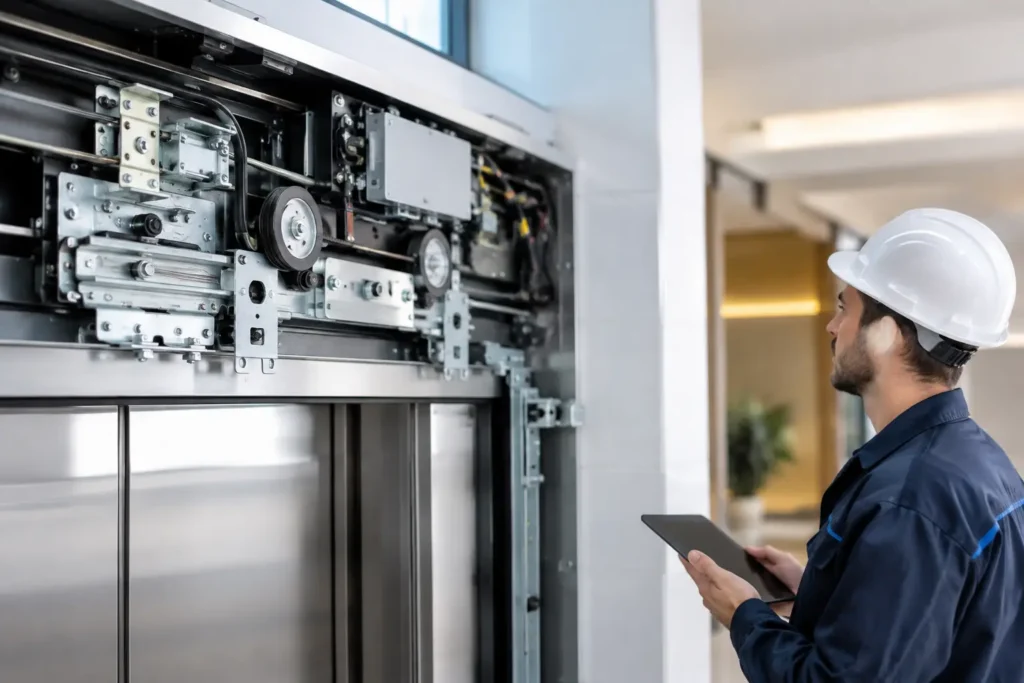
The door operator is mounted on top of the elevator car and uses a motor, controller, belts or chains, rollers, linkages, and safety devices to move the car doors. At each stop, it must coordinate with landing door equipment so passengers can enter and exit safely. That sequence happens hundreds or thousands of times a day in busy residential, office, healthcare, hospitality, and mixed-use buildings.
Door-related trouble is among the most common reasons elevators are taken out of service. That does not mean every issue requires a full operator replacement. A worn roller, damaged belt, poorly adjusted clutch, contaminated door track, or weak door-close setting may be the root cause. But the effects can be similar: doors reopen repeatedly, close too slowly, strike a passenger, fail to fully close, or prevent the elevator from running.
The operational impact extends beyond a single inconvenience. A delayed door cycle increases wait times during peak traffic. Repeated faults can trap an elevator at a floor or trigger shutdowns that place more demand on the remaining units. For a building with one elevator, a door failure can restrict mobility for residents, visitors, and deliveries. For a commercial property, it can disrupt tenant operations and reflect poorly on building management.
Warning Signs That Need Attention
Door equipment rarely fails without giving a building some indication first. A facility manager may hear scraping, banging, squealing, or an unusually loud motor as the doors move. Occupants may report that the doors hesitate before opening, close unevenly, reverse without an obvious obstruction, or require several attempts before the car can depart.
Watch for changes in door speed as well. Doors that are noticeably slower than usual may have mechanical resistance, deteriorating components, or an operator setting that no longer matches the door weight and condition. Doors that close too aggressively create a different concern. They may indicate an adjustment issue or a problem with the protective reopening devices designed to detect people and objects in the doorway.
Intermittent faults deserve the same attention as a complete outage. An elevator that works normally after one or two retries can still have developing problems with door contacts, wiring, sensors, control boards, or mechanical alignment. Clear reporting helps technicians diagnose these conditions efficiently. Note the elevator number, floor, time of day, direction of travel, sounds observed, and whether the issue occurs consistently or only under certain conditions.
Maintaining Elevator Door Operators Before They Fail
Preventive maintenance is the most reliable way to reduce avoidable door failures. During scheduled visits, qualified elevator technicians inspect door panels, tracks, rollers, guides, sills, hangers, interlocks, locks, reopening devices, and the operator assembly. They clean components where appropriate, assess wear, verify operation, and make adjustments that support safe, consistent door movement.
The best maintenance program is not simply a checklist performed at the same level every month. Equipment age, daily cycles, traffic patterns, environmental conditions, and the building’s use should shape the service plan. A high-traffic apartment tower, a medical facility with frequent cart traffic, and a freight elevator serving renovation work place very different demands on door equipment.
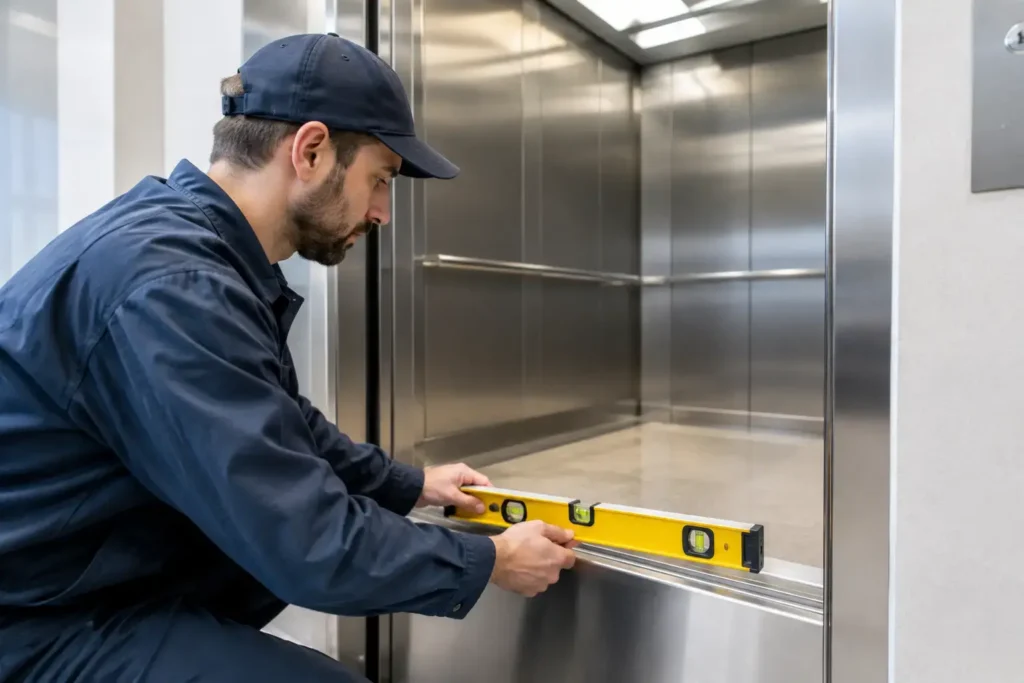
Door sills are a practical example. Dirt, grit, debris, and moisture can accumulate in sill tracks and interfere with door movement. In a building near construction activity or in a facility where carts and deliveries are frequent, sill cleaning and inspection may need more attention than in a lightly used office environment. It is a small maintenance detail with a direct effect on reliability.
Property teams also play a role between service visits. Door panels should not be forced open or held open with objects, and loading practices should prevent carts from striking panels and door edges. If a recurring issue appears, report it promptly rather than asking occupants to work around it. Continued operation with misaligned or damaged door components can increase wear and make a straightforward repair more involved.
Repair or Modernization? The Right Decision Depends
A transparent diagnosis separates a targeted repair from a modernization recommendation. If the operator is fundamentally sound and replacement parts remain available, replacing worn belts, rollers, sensors, switches, or a control component may restore dependable service at a reasonable cost. Adjustment and cleaning may also resolve certain performance concerns.
Modernization becomes more compelling when breakdowns recur, components are obsolete, parts have long lead times, or the operator no longer supports the building’s performance expectations. Older door systems may struggle to provide consistent motion, precise settings, or compatibility with newer protective devices. A modern operator can improve door control, reduce nuisance faults, and support a more reliable passenger experience.
There are trade-offs. Replacing one failed component can be sensible when the remaining system is in good condition. Replacing an entire operator because of a single service call may not be the best use of capital. On the other hand, repeated short-term repairs on aging equipment can create unpredictable costs and leave the building vulnerable to an extended outage when an obsolete part finally fails.
A useful recommendation considers lifecycle cost, not just the immediate invoice. It should account for the condition of related door hardware, availability of replacement parts, recent callback history, expected traffic, code requirements, and the opportunity to coordinate work with other elevator upgrades. For a multi-elevator building, phased modernization may limit disruption while bringing the highest-risk units forward first.
Planning Door Work With Less Disruption
Door operator work requires careful coordination because it can take an elevator out of service. The scope may range from a relatively short repair to a planned modernization project involving operator equipment, door panels, hangers, tracks, wiring, controls, and safety devices. A service provider should explain the anticipated downtime, work sequence, testing requirements, and any conditions that could affect the schedule.
For occupied properties, planning starts with traffic. Work may be scheduled around office arrival periods, resident move-ins, school dismissal, medical appointments, or delivery windows. Buildings with multiple cars may be able to keep another elevator available, although capacity and accessibility needs must be considered. A single-elevator property may need especially clear resident communication and a contingency plan for those who rely on the elevator.
Documentation matters after the work is complete. Facility teams should understand what was repaired or replaced, what conditions were found, what testing was performed, and what follow-up is recommended. That record supports maintenance planning, budgeting, and clear communication with ownership.
Door Operators in New Construction and Renovation
For new installations, door operator decisions should be made with the building’s actual use in mind. Door opening width, panel configuration, finishes, fire-service requirements, security interfaces, freight needs, and expected traffic all influence the right specification. An attractive cab interior cannot compensate for doors that are undersized, poorly coordinated with traffic flow, or difficult to maintain.
Renovation projects require the same coordination. Updated entrances and finishes may change door weight or clearances, while a new access-control system may introduce operational requirements that affect the elevator interface. Bringing elevator expertise into the conversation early helps avoid field conflicts and supports a finished result that performs as well as it looks.
Ascent Elevators approaches door equipment as part of the complete vertical transportation system. Skilled technicians, clear diagnostics, and practical recommendations help building teams address immediate problems while making informed decisions about long-term reliability.
A door that hesitates today may only need a targeted adjustment, but it also may be the first visible sign of aging equipment. Addressing that distinction early gives your building more control over cost, scheduling, and the experience of everyone who depends on the elevator.