
An elevator door that closes, then opens again can create an immediate question for a building team: why do elevator doors reopen when no one appears to be in the doorway? Often, the elevator is doing exactly what it was designed to do. Door systems are programmed to protect passengers from a closing door, and they respond to even small interruptions in the entrance zone.
But repeated reopening is not always normal. A door that cycles open and closed, delays service, or requires passengers to wait through several attempts may be signaling a condition that deserves professional attention. For property owners, facility managers, and building engineers, the difference matters. It affects passenger safety, accessibility, tenant confidence, and elevator uptime.
Why Do Elevator Doors Reopen During Normal Operation?
The most common reason is simple: the elevator detects an obstruction. Modern elevator entrances use safety devices that prevent doors from closing on a person, cart, package, or other object in the doorway. If the system detects something in the path of travel, it commands the doors to reopen.
On many elevators, this protection comes from an infrared light curtain or electronic safety edge. The curtain projects multiple invisible beams across the opening. A hand, suitcase, stroller, pet leash, or even a partially extended delivery cart can interrupt one or more beams and trigger reopening. This is a critical safety function, particularly in high-traffic residential, medical, office, and hospitality properties.
A passenger may also press the door-open button while entering or exiting. Depending on the controller settings, the elevator may hold the doors longer or restart the door cycle. Some buildings have extended door dwell times to support accessibility requirements or accommodate regular traffic patterns. In those cases, a door that appears slow or overly cautious may be operating according to its programmed settings.
When Reopening Points to a Door System Issue
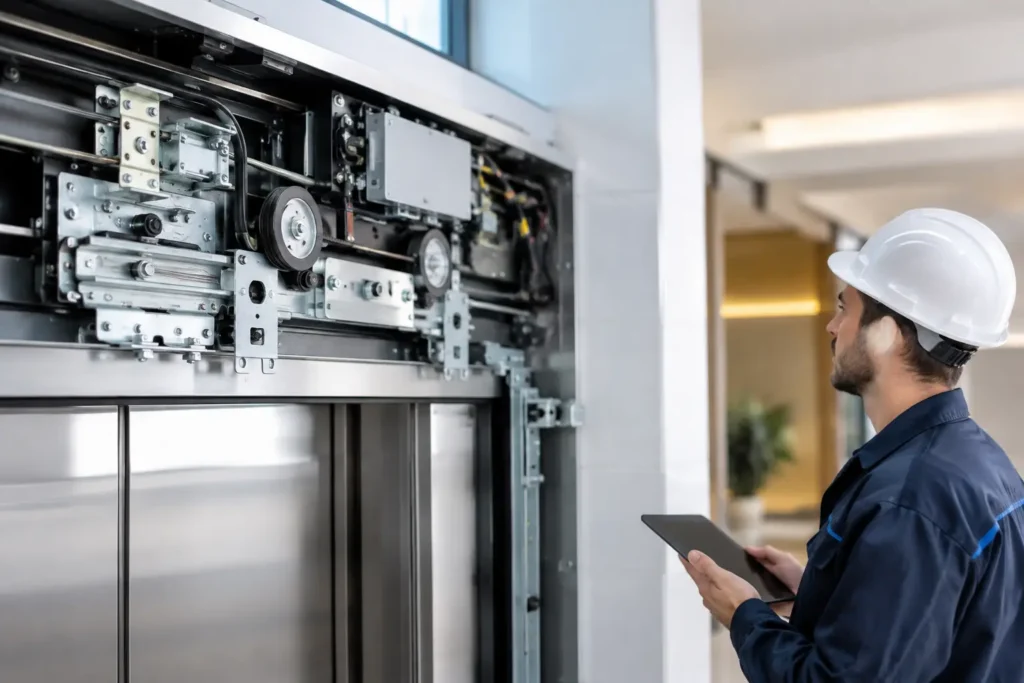
If doors reopen with no visible obstruction, the cause may be less obvious. Elevator doors are highly used mechanical systems. They rely on the car door operator, landing door equipment, rollers, tracks, sensors, wiring, and controller signals working together precisely. A small fault can cause the system to interpret normal movement as an obstruction.
Misaligned or Contaminated Light Curtains
Light curtains are effective, but they can be affected by dirt, damage, misalignment, loose connections, or moisture. Dust and debris are especially common in properties undergoing construction, renovation, or heavy tenant move-ins. A damaged sensor can send inconsistent signals to the door operator, causing doors to reopen even when the entrance is clear.
This does not mean the sensor should be bypassed. Disabling a safety device creates a serious risk and can expose a building to liability. The correct response is to have a qualified elevator technician inspect, clean, test, and repair the affected equipment.
Debris in the Door Sill or Track
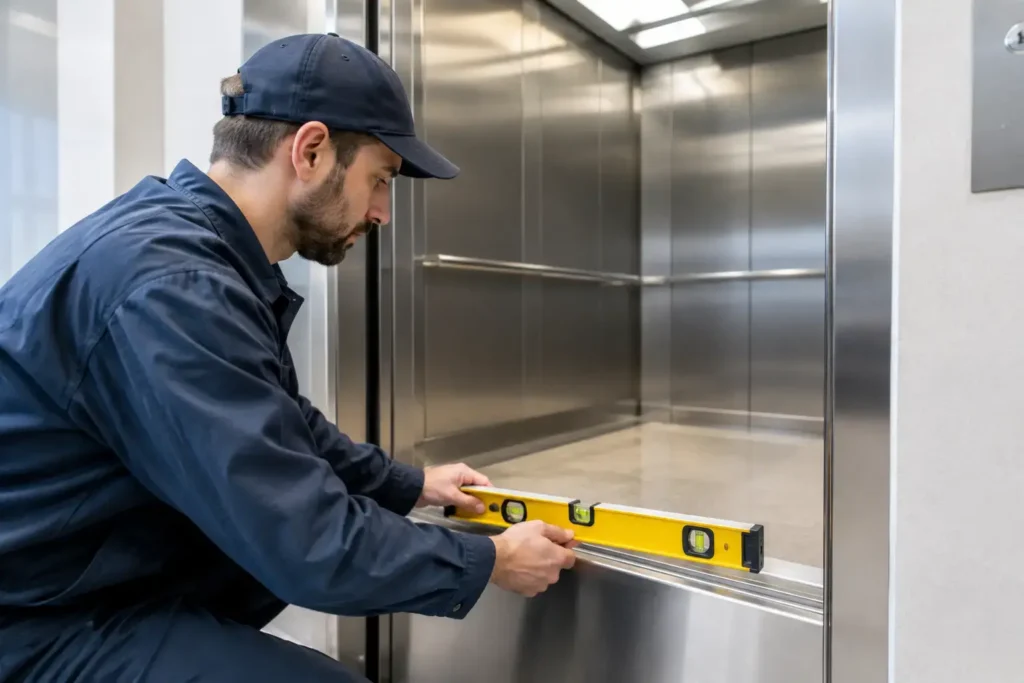
The sill is the grooved threshold at the base of the elevator entrance. It collects debris more easily than many people realize. Small stones, broken hardware, paper clips, salt residue, and construction dust can interfere with door movement.
When a door cannot travel smoothly to its fully closed position, the operator may reverse it. In some cases, the doors may make several attempts before the elevator places itself out of service. Routine cleaning helps, but building staff should avoid inserting tools into the sill or attempting to adjust components. Door equipment can move unexpectedly, and improper adjustments can make the problem worse.
Worn Door Rollers, Hangers, or Guides
Door panels hang from rollers and travel along tracks. As components wear, doors can drag, bind, vibrate, or fail to close smoothly. The door operator senses abnormal resistance and reopens the doors as a protective response.
This issue may begin as an intermittent annoyance: a door hesitates at one floor or reopens only during certain times of day. Left unaddressed, it can develop into recurring shutdowns, damaged panels, and more extensive repair needs. Early diagnostics are usually the most cost-effective approach.
Door Operator or Controller Problems
The door operator is the equipment that opens and closes the car doors. It monitors door position, speed, and resistance. Problems with belts, clutches, switches, motor components, or settings can lead to erratic operation.
The elevator controller can also record a door-related fault when it receives a conflicting signal. For example, the controller may receive a command that doors are closed while a sensor indicates they are still obstructed. A technician can review fault history, inspect the operator, and determine whether the issue is mechanical, electrical, or related to adjustments.
Reopening at One Floor Versus Every Floor
The location of the problem provides a useful clue. If doors reopen at only one landing, the issue may involve that floor’s sill, interlock, hanger equipment, or door panel alignment. A problem occurring at every floor is more likely related to the car door operator, safety edge, light curtain, or controller inputs.
That distinction is helpful when reporting the issue. Building staff should note the affected elevator, the floor or floors involved, the time of day, whether passengers were present, and any visible behavior such as scraping, bouncing, slow closing, or repeated cycling. Clear observations allow technicians to arrive with better context and help reduce diagnostic time.
What Building Teams Should Do When Doors Keep Reopening
A single reopening event is usually not an emergency. Repeated door cycling, however, should be taken seriously. It can inconvenience tenants, delay deliveries, affect accessibility, and place additional strain on door equipment.
First, keep the landing and doorway clear. Look for visible objects near the sill, but do not attempt to force the doors shut or reach into moving equipment. If an elevator is repeatedly cycling or will not close, post appropriate notice if possible and contact your elevator service provider.
If the doors are striking passengers, closing too quickly, failing to reopen when a person enters, or trapping someone, treat the condition as urgent. Follow your building’s emergency procedures and request immediate elevator service. Passenger entrapments should always be handled by trained responders and qualified elevator personnel.
For non-emergency but recurring issues, a service visit should include more than resetting the elevator. The technician should identify the source of the fault, test the reopening device, evaluate door movement, inspect the sill and rollers, and document recommended repairs. A reset may restore operation temporarily, but it does not resolve worn or misadjusted equipment.
Preventive Maintenance Reduces Door-Related Calls
Door equipment is responsible for a significant share of elevator service calls because it experiences constant use and exposure to debris. Preventive maintenance gives technicians the opportunity to inspect door operation before a minor issue becomes a shutdown.
A thorough maintenance program includes checking safety devices, cleaning door tracks and sills, examining rollers and guides, verifying closing force and speed, reviewing fault history, and identifying worn components before failure. The right interval depends on building traffic, equipment age, environment, and use patterns. A busy apartment building with move-ins, pets, and deliveries places different demands on door systems than a low-traffic office building.
Modernization can also be worth evaluating for aging equipment with recurring door faults. Replacing obsolete sensors, upgrading door operators, or improving controller diagnostics may reduce callbacks and improve passenger experience. Still, modernization is not the answer to every door issue. Honest recommendations should distinguish between a targeted repair, planned component replacement, and a broader upgrade based on the equipment’s condition and lifecycle needs.
A Small Door Symptom Can Protect a Larger Asset
Elevator doors reopening is often the system choosing safety over speed. That is a good outcome when a passenger or object is in the doorway. When it happens repeatedly without an apparent reason, it is also useful early warning. Addressing that signal promptly protects passengers, helps preserve uptime, and prevents a manageable door repair from becoming a more disruptive service event.
Ascent Elevators helps building teams assess door-operation concerns with clear diagnostics, responsive service, and recommendations based on what the equipment actually needs. A documented pattern of door behavior gives your service partner the information needed to restore dependable operation and keep your building moving.