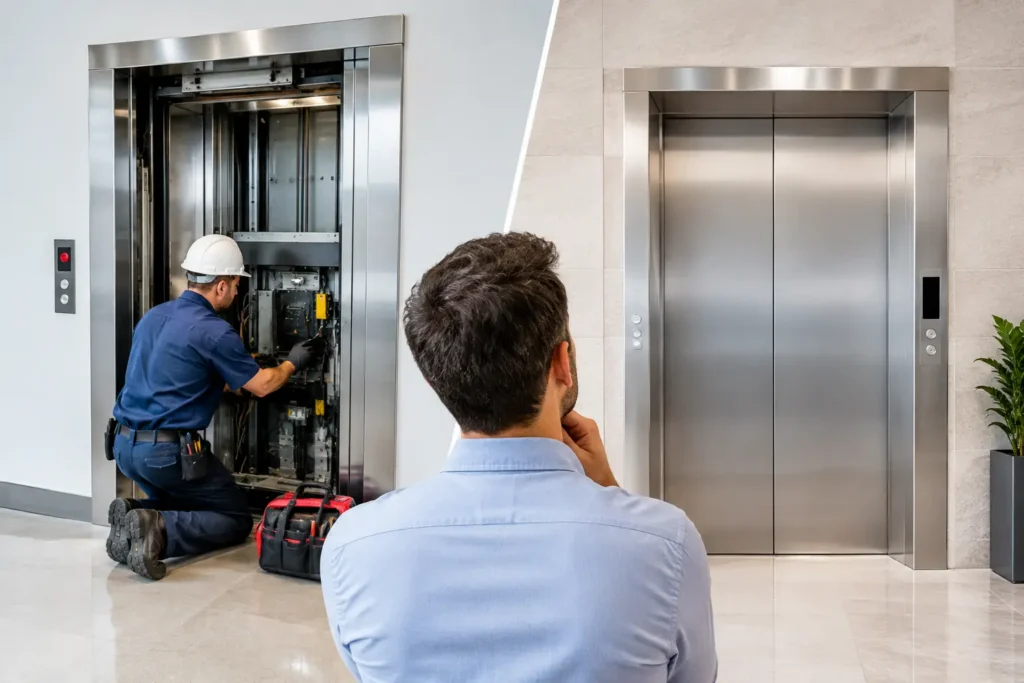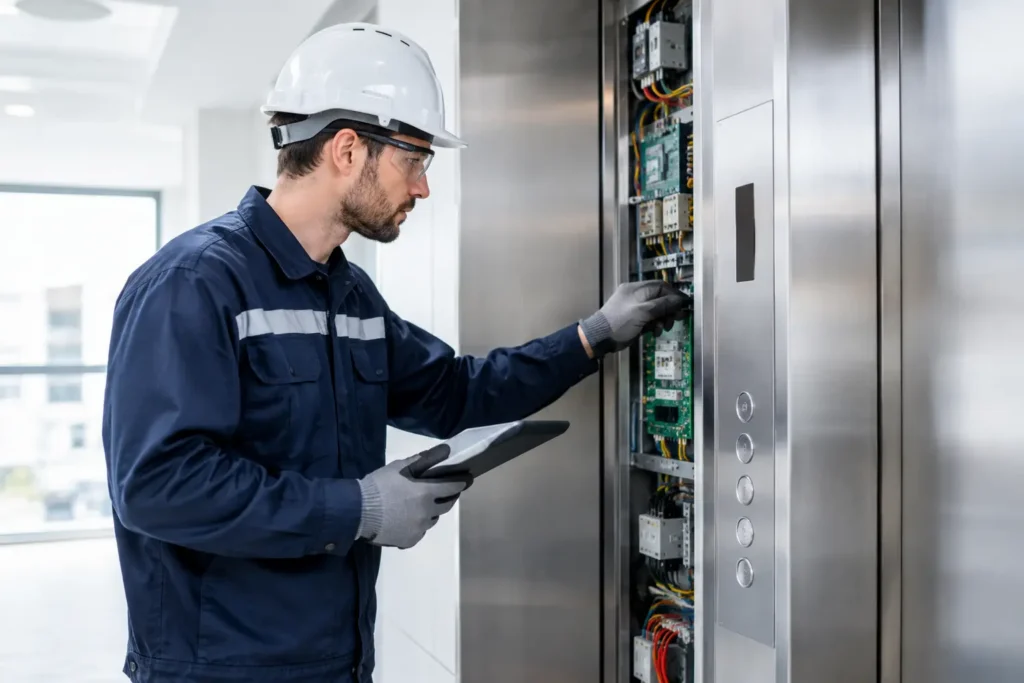

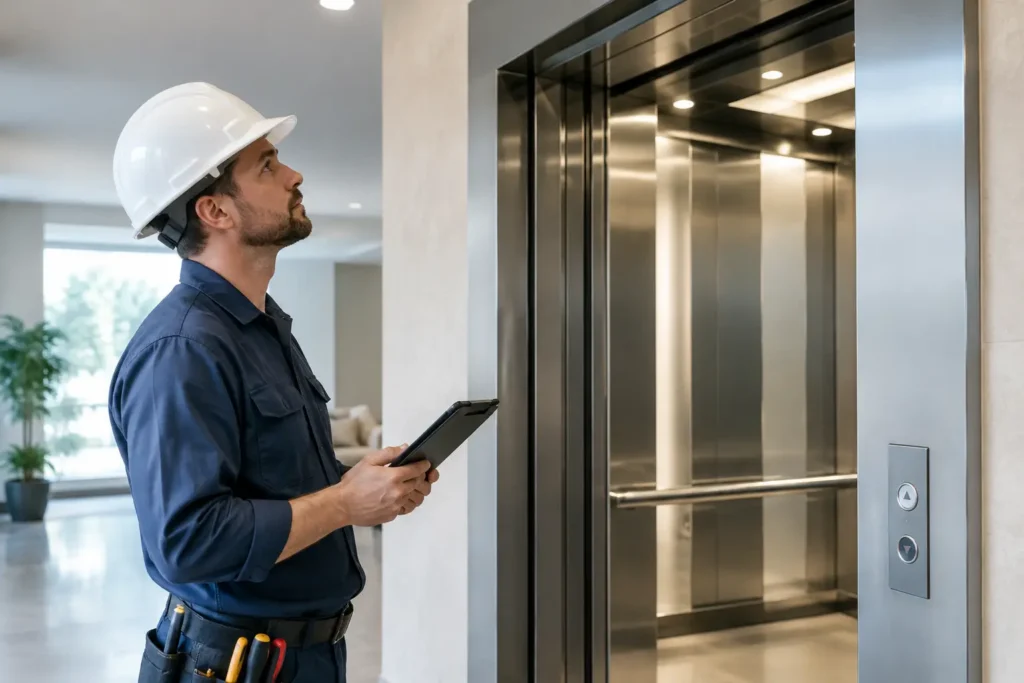
A stalled elevator at move-in time is more than an inconvenience. For an apartment building, it can disrupt accessibility, frustrate residents, delay vendors, and put property staff in a difficult position. An apartment elevator replacement may be the right answer when recurring repairs no longer restore dependable service, but replacement should be a planned capital decision, not a reaction to one bad outage.
The right path depends on the equipment’s condition, repair history, code requirements, building use, and the improvements residents actually need. In some properties, targeted modernization can extend useful life at a lower upfront cost. In others, aging equipment has reached the point where continuing to repair it costs more in downtime, risk, and lost confidence than a replacement project.
When Apartment Elevator Replacement Is the Better Option
Age alone does not determine whether an elevator should be replaced. Well-maintained equipment can perform reliably for many years, while a younger system with obsolete components or chronic water damage may require significant work sooner. The question is whether the elevator can continue to provide safe, reliable, supportable service.
Frequent shutdowns are one of the clearest warning signs. A unit that needs repeated callbacks for door faults, leveling issues, controller failures, or drive problems is telling the building something important. Each repair may be reasonable on its own, but the pattern matters. When outages become common, residents experience the system as unreliable even if it returns to service quickly.
Parts availability is another deciding factor. Older controllers, relays, door operators, and drive systems can become difficult or expensive to support. Technicians may be able to keep a legacy system running, but lead times for components and limited replacement options can turn a routine repair into an extended outage. A replacement or comprehensive modernization reduces that exposure by moving the building to current, serviceable equipment.
Replacement also deserves consideration when the elevator no longer meets the building’s operational needs. A growing resident population, frequent deliveries, increased accessibility demands, or changes in property positioning can expose limitations in cab size, ride quality, door performance, and traffic handling. For a renovation or repositioning project, an updated elevator can support both daily operations and the resident experience.
A building should also look closely at replacement when safety or code-compliance upgrades require extensive changes. Requirements vary by jurisdiction and by the scope of work. A qualified elevator partner can identify which upgrades are triggered, explain the practical impact, and help avoid surprises after the project begins.
Replacement, Modernization, or Continued Repair?
These options are not interchangeable. Continued repair is appropriate when issues are isolated, parts remain available, and the system has a credible path to reliable operation. It can be the most cost-effective choice for equipment that is fundamentally sound.
Modernization updates major components while retaining portions of the existing elevator system that remain suitable. A project might include a new controller, machine drive, door equipment, fixtures, cab finishes, or a combination of these items. Modernization is often a strong option for apartment buildings that need better reliability and appearance without the scope of a full replacement.
A full apartment elevator replacement is generally the more comprehensive route. It may involve replacing the elevator package and addressing associated hoistway, machine room, electrical, and code-related work. It carries a larger capital investment and requires careful scheduling, but it can provide a more complete reset for a system that has exhausted its useful life.
The best recommendation should be backed by diagnostics, not assumptions. Property owners and managers should expect a clear explanation of what is failing, which components can be retained, what risks remain under each option, and how the projected costs compare over time. Honest recommendations protect the budget and help decision-makers plan with confidence.
Build the Business Case Before the Next Major Failure
Elevator projects are easier to manage when they are planned before an emergency forces the timeline. Start by reviewing service records for recurring faults, repair spending, equipment age, and the length of past outages. This history often reveals whether the building is dealing with normal maintenance or a declining system.
Consider the costs that do not appear on a repair invoice. A prolonged elevator outage affects residents who use mobility devices, families with strollers, moving schedules, package deliveries, housekeeping, and emergency access. In a taller property, a single unavailable elevator can quickly become a resident-relations issue. If the building has only one car, the operational stakes are even higher.
Capital planning should also account for the work around the elevator itself. Electrical upgrades, machine room conditions, fire alarm interfaces, cab finishes, permits, inspections, and temporary protection can affect the final scope. A detailed survey early in the process helps establish a realistic budget rather than a low initial figure followed by change orders.
For multifamily owners, it is useful to compare the project against the property’s broader investment plan. If common areas, units, access control, or building systems are being upgraded, elevator work may fit naturally into the same cycle. Coordinating work can reduce resident disruption and ensure the finished elevator matches the building’s intended standard.
Planning an Apartment Elevator Replacement Around Residents
An elevator replacement project requires coordination, especially in occupied buildings. Clear communication is as important as the construction schedule. Residents need advance notice about the project timeline, expected service interruptions, temporary access arrangements, construction hours, and a point of contact for questions.
The plan should give special attention to residents with accessibility needs. If one elevator remains in service, work may need to be sequenced to preserve access. In a single-elevator building, management may need to arrange practical support for residents who cannot safely use stairs. The right solution depends on the building layout, resident population, and local requirements, but it should be addressed before equipment is taken offline.
A capable project team will also coordinate with building staff, general contractors, inspectors, and other trades. Elevator work often intersects with electrical, fire alarm, security, HVAC, and finish work. Defining responsibilities early prevents gaps that can delay inspections or turnover.
What a Well-Managed Project Looks Like
The process begins with an on-site evaluation of the elevator, hoistway, machine room or control space, power supply, doors, and existing conditions. From there, the project team can develop a scope that distinguishes required work from optional enhancements. That clarity is essential for making sound budget decisions.
Equipment selection should reflect the building, not just a catalog specification. A high-rise apartment property, a mid-rise community, and an older walk-up conversion with a limited shaft each present different constraints. Door configuration, cab capacity, machine space, energy use, finishes, fixture durability, and remote monitoring capabilities should all be evaluated in the context of how residents use the building.
Permitting and inspection requirements should be built into the schedule from the start. Lead times for equipment, local authority review, field conditions, and inspection availability can all affect completion dates. Transparent updates help property teams communicate realistic expectations instead of reacting to shifting timelines.
At turnover, the project should include thorough testing, required documentation, staff orientation, and a plan for ongoing preventative maintenance. New equipment still needs regular attention. Maintenance protects the investment, supports compliance, and gives technicians the opportunity to identify small issues before they become service interruptions.
Questions Property Teams Should Ask
Before approving a project, decision-makers should ask for the expected useful life of each proposed option, the availability of replacement parts, anticipated downtime, code-related scope, warranty coverage, and the maintenance plan after installation. They should also ask what assumptions are included in the proposal and what existing conditions could change the price or schedule.
Fast answers are valuable, but clear answers are better. A contractor should be willing to explain technical findings in plain language and identify where a repair remains a sensible alternative. The goal is not to replace equipment unnecessarily. It is to make the building safer, more reliable, and easier to operate over the long term.
Ascent Elevators approaches replacement planning as a building-performance decision. With skilled union technicians, clear diagnostics, and long-term service support, the focus stays on the solution that fits the property and the people who depend on it.
The strongest time to begin the conversation is while the elevator is still operating. A thoughtful evaluation now gives your team options, protects residents from avoidable disruption, and turns an uncertain future expense into a manageable plan.