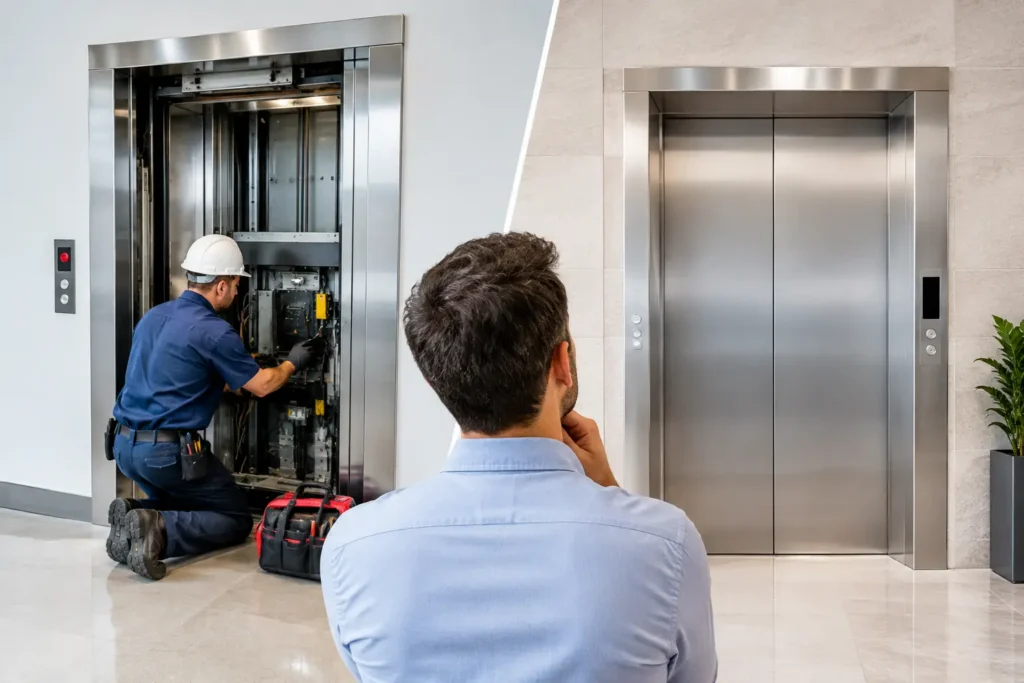

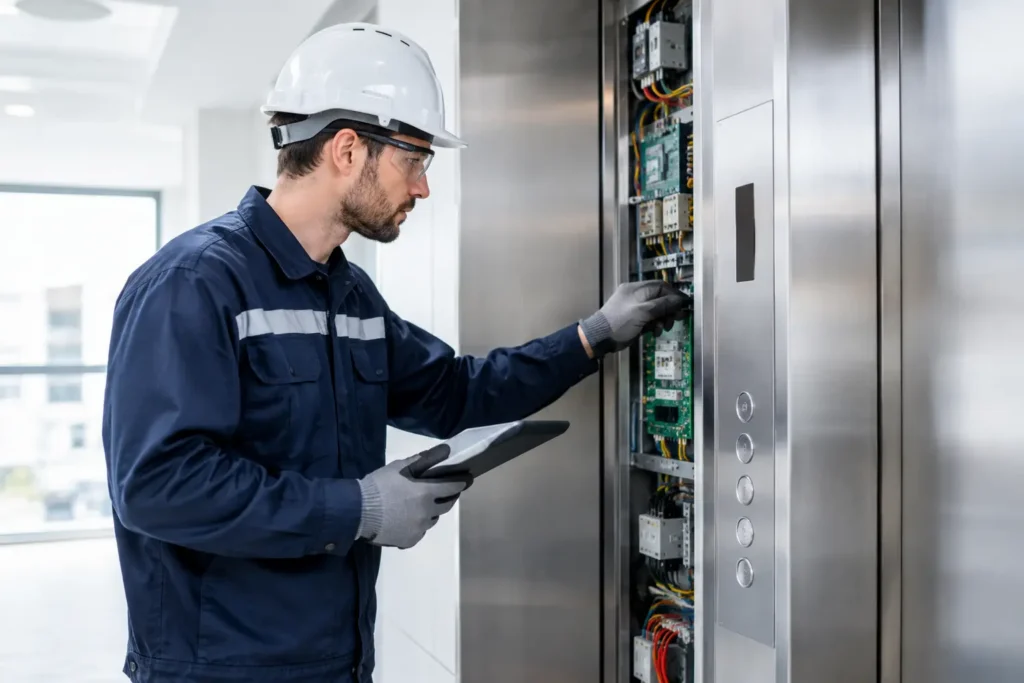
A stopped elevator is rarely just an inconvenience. For a property manager, building engineer, or owner, it can affect accessibility, tenant confidence, deliveries, lease obligations, and life-safety planning within minutes. Knowing how to troubleshoot elevator faults does not mean attempting to repair the equipment yourself. It means taking the right first actions, protecting passengers, documenting the symptoms, and giving a qualified elevator technician the information needed to restore service safely.
The most effective response starts with a simple principle: treat unusual elevator behavior as a safety issue first and an operational issue second. Modern systems have multiple protective circuits and diagnostic controls, but a fault can involve electrical power, door equipment, a controller, a communication device, or a mechanical component. The visible symptom is not always the underlying cause.
Start With Safety and Occupant Communication
If passengers are trapped, use the building’s emergency procedure immediately. Establish communication through the elevator’s two-way emergency phone or intercom when available, contact emergency responders when conditions warrant it, and dispatch a licensed elevator service provider. Reassure passengers that help is on the way and instruct them not to force doors open or attempt to exit without trained assistance.
Do not try to open landing doors, access the hoistway, enter the machine room, reset breakers repeatedly, or place the elevator back in service after an unexplained shutdown. These actions can create additional hazards, erase useful diagnostic evidence, or turn a manageable service call into a more serious incident.
When no one is trapped, take the affected car out of service if it is stopping inaccurately, showing repeated door problems, making unusual noises, displaying fault messages, or behaving unpredictably. Post clear signage at every served landing where practical. If the building has multiple elevators, consider how the outage affects accessible routes, peak traffic, freight operations, and emergency access.
How to Troubleshoot Elevator Faults Without Taking Unsafe Risks
A facility team’s role is to observe conditions around the elevator, not to work on the elevator system. A disciplined first review can narrow the service response and help a technician arrive prepared.
Start by identifying the scope. Is one car affected, or is the entire group unavailable? Does the issue occur at one floor or throughout the building? Is the car stuck, running but bypassing calls, stopping unevenly, or simply showing a display message? A single-car problem often points to an issue within that unit, while multiple cars down at once may indicate a building power event, fire service condition, common communication issue, or controller-related concern.
Next, check for recent building events that could be connected. Power fluctuations, generator testing, fire alarm activity, water intrusion, HVAC work, construction dust, remodeling near elevator entrances, and network changes can all affect elevator operation. This is not about assigning a cause before diagnosis. It gives the service team useful context and can prevent time-consuming guesswork.
Observe and record what users see. Note the car number, floor location, time of occurrence, display message, door condition, direction of travel, and whether the issue is intermittent or continuous. If a door repeatedly reopens, for example, document the landing and whether an obstruction was visible. If the car levels high or low, do not allow passengers to continue using it, and report the approximate gap at the threshold.
Photographs of display messages, indicator lights, and posted conditions can be useful when taken safely from public areas. Avoid photographing or touching control panels inside restricted spaces. Do not clear fault messages until the elevator contractor has advised you to do so.
Recognize the Symptoms That Require Immediate Service
Some elevator faults require prompt professional attention even if the car is not currently occupied. Remove the car from service and request urgent support when you observe any of the following:
- Passengers trapped in a car or an inoperative emergency communication device.
- Smoke, burning odors, sparking, excessive heat, water entering the elevator area, or unusual vibration.
- Doors that will not close, reopen repeatedly, close with abnormal force, or fail to align with the landing.
- A car that stops above or below the floor, moves unexpectedly, makes loud mechanical sounds, or repeatedly shuts down.
- Damage to doors, sills, fixtures, handrails, or operating panels that could affect safe use.
An elevator that resumes operation after a brief interruption should not automatically be treated as resolved. Intermittent faults are among the most difficult problems to diagnose because the system may appear normal when the technician arrives. A record of when and how the issue occurred makes a meaningful difference.
Common Fault Categories and What They May Indicate
Door-related calls are among the most common elevator service requests. A door may fail to close because of debris in the sill, a damaged door component, misalignment, a sensor issue, or a control problem. Building staff can visually check for obvious items in the door track from the public side, but should not reach into the sill, force the doors, or alter door settings. Repeated door faults deserve service attention because they can lead to shutdowns and accelerate wear.
Power and controller faults may show up as a blank display, an inoperative car, a fault code, or several elevators going out of service after a utility event. Verify whether the building experienced a power disturbance and report that information. Only authorized personnel should evaluate electrical disconnects, controller equipment, and emergency power interfaces.
Leveling problems occur when the elevator car does not stop flush with the floor. Even a small elevation difference can present a trip risk, particularly for older adults, wheelchair users, delivery personnel, and anyone moving carts. Take the car out of service and report the location and direction of the level difference.
Ride-quality concerns, such as jolts, vibration, scraping sounds, or extended travel time, may not trigger an immediate shutdown, but they should not be ignored. These symptoms can result from normal component wear, alignment concerns, drive-system issues, or conditions that need closer evaluation. Early reporting often supports a planned repair instead of an emergency outage.
Give Your Service Partner a Better Service Call
The fastest path to a clear diagnosis is a complete service request. Provide the building address, elevator identification number, current car location if known, whether passengers are inside, and whether the unit has been removed from service. Include the exact fault message, the first time the issue was reported, recent building events, and any pattern your staff or tenants have noticed.
Also explain the operational impact. A failed passenger elevator in a high-rise residential building may create an accessibility issue immediately. A freight elevator outage may affect tenant move-ins, food service, medical deliveries, or construction schedules. That context helps the service provider prioritize the response and coordinate the appropriate technician, parts, and follow-up communication.
After the technician evaluates the equipment, ask for a plain-language explanation of the fault, what was done to restore service, whether the repair is temporary or permanent, and what follow-up is recommended. Transparent diagnostics are especially valuable for aging equipment, where a series of isolated calls may signal that a planned modernization or targeted component upgrade is more cost-effective than repeated emergency repairs.
Use Fault History to Improve Elevator Reliability
Troubleshooting should not end when the car starts moving again. Review recurring callbacks by elevator, fault type, time of day, and affected floor. A pattern of door calls at one landing, for instance, may point to site conditions or a component that needs scheduled attention. Repeated controller resets may require a deeper review of power quality, equipment condition, or the system’s remaining useful life.
Preventive maintenance remains the strongest defense against avoidable outages. A well-managed program includes regular inspection, cleaning, adjustment, lubrication where applicable, testing, documented findings, and recommendations prioritized by safety, compliance, reliability, and budget. It should also account for the building’s actual use. A lightly used office elevator and a high-traffic residential or healthcare elevator face different operating demands.
Ascent Elevators approaches service calls with the same long-term perspective. The goal is not simply to clear a fault and leave. It is to identify what happened, communicate honestly about the condition of the equipment, and help building teams make practical decisions that protect uptime and extend asset life.
When an elevator fault occurs, calm action and precise documentation protect people first and make the repair process more efficient. The best buildings do not wait for repeat failures to reveal a bigger problem – they turn every service event into useful information for safer, more dependable vertical transportation.