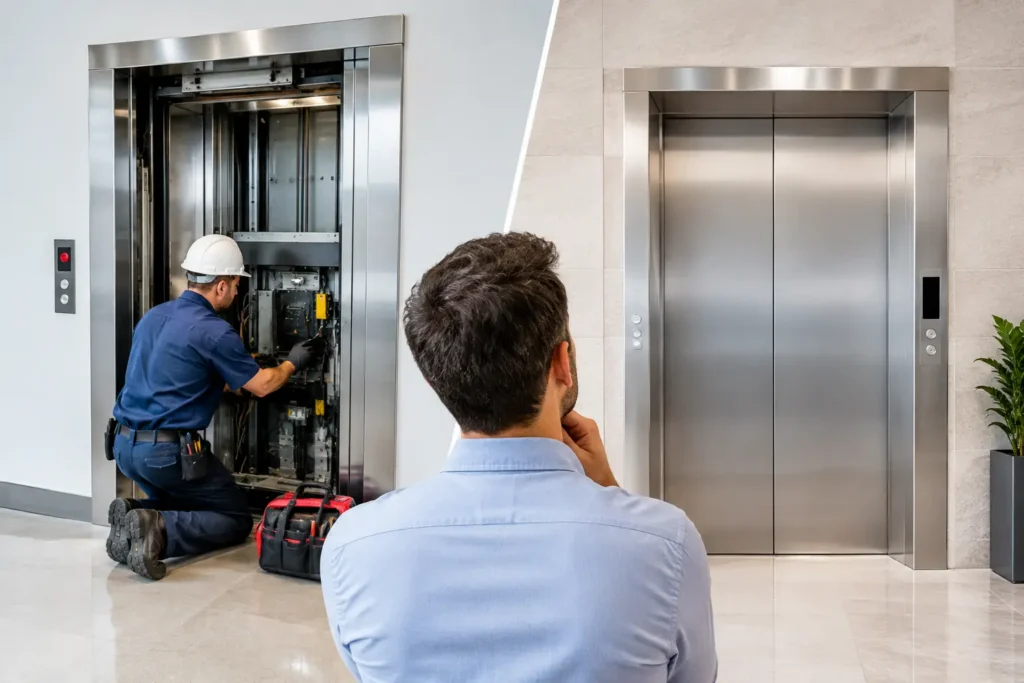

A stopped elevator is not merely an inconvenience when tenants, visitors, patients, employees, or residents depend on it. An elevator sudden stoppage can create anxiety for passengers, interrupt accessible travel, delay operations, and put building staff under immediate pressure to respond. The right response protects people first, preserves the equipment, and gives decision-makers the information they need to prevent a repeat event.
For property teams, the goal is not to guess what caused the stop or get the car moving as quickly as possible at any cost. It is to follow a safe process, communicate clearly, and bring in qualified elevator technicians to diagnose the condition before the elevator returns to service.
What to Do When an Elevator Stops Suddenly
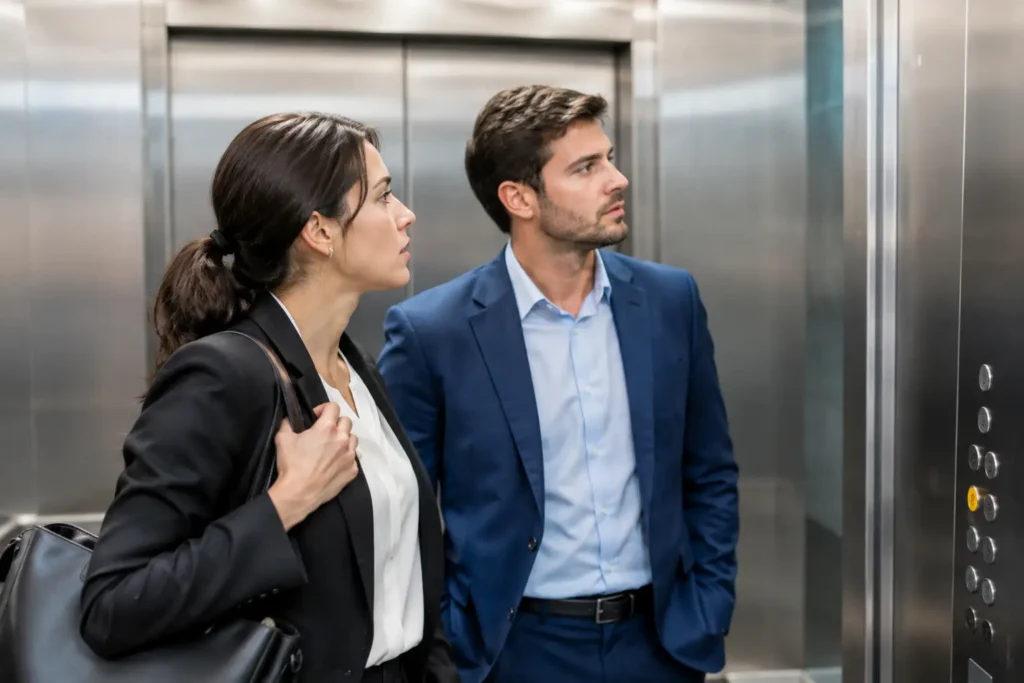
If passengers are inside the car, establish communication right away. Ask them to use the emergency phone or alarm button if they have not already done so. Let them know help has been contacted, tell them to remain calm, and instruct them not to force doors open or attempt to exit without trained assistance.
Building staff should contact the elevator service provider and provide the building address, elevator location, whether passengers are trapped, and any information displayed on the car or controller. If there is a medical emergency, smoke, fire, or another life-safety concern, call 911 as well. Emergency responders and elevator mechanics have different but complementary roles in a safe rescue.
Do not attempt to reset breakers, open hoistway doors, or move the car from the machine room unless you are trained and authorized to do so. A car that appears to be close to a landing may still be out of level, and an improvised release can turn a manageable service call into a serious injury risk.
Once passengers are safely out, keep the affected elevator out of service until a qualified technician has evaluated it. Posting clear signage and directing occupants to another elevator, stairway, or accessible route helps limit confusion while service is underway.
Why an Elevator Sudden Stoppage Happens
Modern elevator systems are designed to stop when they detect a condition that could affect safe operation. That is often frustrating in the moment, but it is a protective function. The car may stop because the system recognizes a door issue, loss of power, traction problem, communication fault, or another condition that requires attention.
Common causes include:
- A building power interruption, voltage fluctuation, or failed backup power component
- Door equipment that cannot confirm a door is fully closed and locked
- A fault in the controller, relay, drive, wiring, or communication system
- A leveling or position issue that prevents the car from accurately reaching a floor
- Worn mechanical components affecting the machine, brake, cables, rollers, or hoistway equipment
- Water, heat, dust, or other environmental conditions affecting electrical components
The exact cause depends on the elevator’s age, design, maintenance history, and operating environment. A single intermittent stop may trace back to a loose connection or a failing sensor. Repeated shutdowns may point to aging controls, deteriorated door operators, inconsistent building power, or equipment that has reached the point where modernization should be considered.
That distinction matters. Replacing parts without identifying the underlying pattern can create repeat calls and avoidable downtime. Clear diagnostics are more valuable than a quick assumption.
Protect Passengers Through Clear Communication
Passengers who are stopped between floors may feel vulnerable even when the elevator is operating as designed. A calm, specific message from building staff can make a meaningful difference. Avoid promising an arrival time that has not been confirmed. Instead, tell passengers that help is on the way, that they should remain inside the car, and that trained personnel will assist them.
For residential properties, consider who may need additional support during an outage. Residents with mobility limitations, families with young children, and people who rely on the elevator for daily access should receive practical updates about alternate arrangements. In commercial properties, the same planning applies to visitors, employees, deliveries, and any areas with accessibility obligations.
Facility teams should also document the event. Record the time of the stoppage, car number, floor position if known, passenger reports, weather conditions, recent power events, and any error messages. This information helps technicians diagnose intermittent problems and gives property managers a useful record for follow-up conversations.
What Technicians Check After a Stoppage
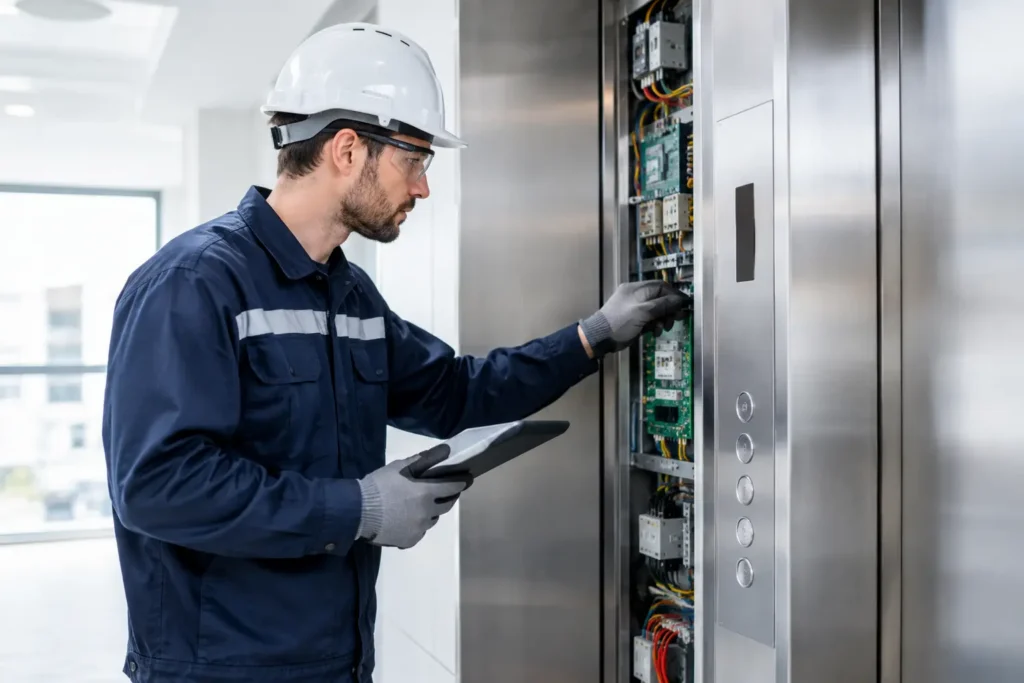
A professional response begins with passenger safety and a controlled return to service. After that, the technician reviews the elevator controller, fault history, door circuits, safety chain, drive system, brake operation, leveling performance, and relevant hoistway equipment. The scope changes based on the type of elevator and the fault information available.
A good service report should explain what was found in plain language. Building decision-makers need to know whether the issue was isolated, whether a part was adjusted or replaced, whether the car requires additional monitoring, and whether a larger repair is recommended. They should also understand the operational risk of deferring the recommendation.
Not every shutdown calls for a major capital project. An older elevator can often remain dependable with timely repairs and disciplined preventative maintenance. However, there is a point at which repeated component failures, unavailable parts, poor ride quality, and recurring entrapments indicate that modernization is the more responsible long-term choice.
Preventing Repeat Elevator Stoppages
Preventative maintenance is the strongest defense against unexpected downtime, but it must be more than a checklist visit. Effective maintenance combines routine inspection, cleaning, adjustment, lubrication where appropriate, testing, and careful review of the system’s operating history.
Door equipment deserves particular attention because doors cycle more often than most other elevator components. Worn rollers, damaged contacts, misalignment, and declining operator performance can all contribute to nuisance shutdowns or unreliable service. Frequent door-related callbacks are a signal to investigate the condition before the issue escalates into a passenger entrapment.
Building conditions also matter. Electrical quality, water intrusion, machine room temperature, ventilation, and construction dust can affect elevator reliability. A service partner should evaluate these surrounding factors rather than treating every failure as an elevator-only problem. For example, replacing a damaged electronic component without addressing repeated moisture exposure may simply postpone the next failure.
For properties with aging equipment, maintenance records can support better capital planning. If the same systems generate repeat calls, if parts are becoming difficult to source, or if the controller no longer provides reliable diagnostics, a modernization assessment can identify practical options. Modernization does not always mean replacing every component at once. A phased plan may focus first on the controller, door operators, fixtures, or drive equipment based on the building’s needs and budget.
Build a Response Plan Before the Next Event
A written elevator outage procedure helps property staff act confidently when a car stops. It should identify the elevator service contact, emergency escalation process, building access instructions, key locations, passenger communication responsibilities, and the process for documenting incidents. Review the plan with front-desk teams, security personnel, engineers, and after-hours contacts.
It is also wise to confirm that elevator emergency phones are tested regularly and that the monitoring information is current. A passenger should be able to reach a live response path without relying on a personal cell signal inside the car. For managed portfolios, standardizing this process across buildings can reduce confusion and improve response consistency.
Ascent Elevators approaches emergency service and maintenance with the same objective: safe, dependable vertical transportation supported by transparent communication. Fast response matters, but a clear diagnosis and an honest recommendation are what help protect long-term uptime.
The next elevator stoppage may be impossible to predict precisely. Your building’s response does not have to be. With trained service support, current maintenance records, and a clear plan for passengers and staff, a stressful event becomes a controlled operation instead of an avoidable crisis.