
An elevator that runs quietly every day can still be developing a problem. A door operator may be slowing down, a leveling issue may be emerging, or a component in the machine room may be nearing the end of its useful life. A practical elevator maintenance checklist for buildings helps property teams identify concerns before they become tenant complaints, shutdowns, or safety risks.
For facility managers and building owners, the goal is not to turn staff into elevator mechanics. It is to create a clear operating routine: observe performance, document changes, maintain safe conditions around the equipment, and know when to call qualified elevator professionals. That routine protects uptime, supports code compliance, and gives decision-makers better information for repair and modernization planning.
Start With a Clear Service Record
Every elevator should have a current, accessible record of service visits, repairs, testing, callbacks, and reported concerns. This is often the most useful starting point when evaluating reliability. Repeated door faults, intermittent leveling calls, or frequent passenger entrapments are patterns, not isolated events.
Review the maintenance log monthly with your service provider. Confirm what work was completed, what was observed, which parts may need attention next, and whether any recommendation is urgent. Transparent diagnostics matter here. A good recommendation explains the condition found, the operational or safety impact, the available repair options, and the likely consequence of waiting.
Keep records of required inspections and testing as well. Requirements vary by jurisdiction, building type, and elevator equipment, so your provider should help you understand the applicable schedule rather than relying on a generic calendar.
Elevator Maintenance Checklist for Buildings: Weekly Observations
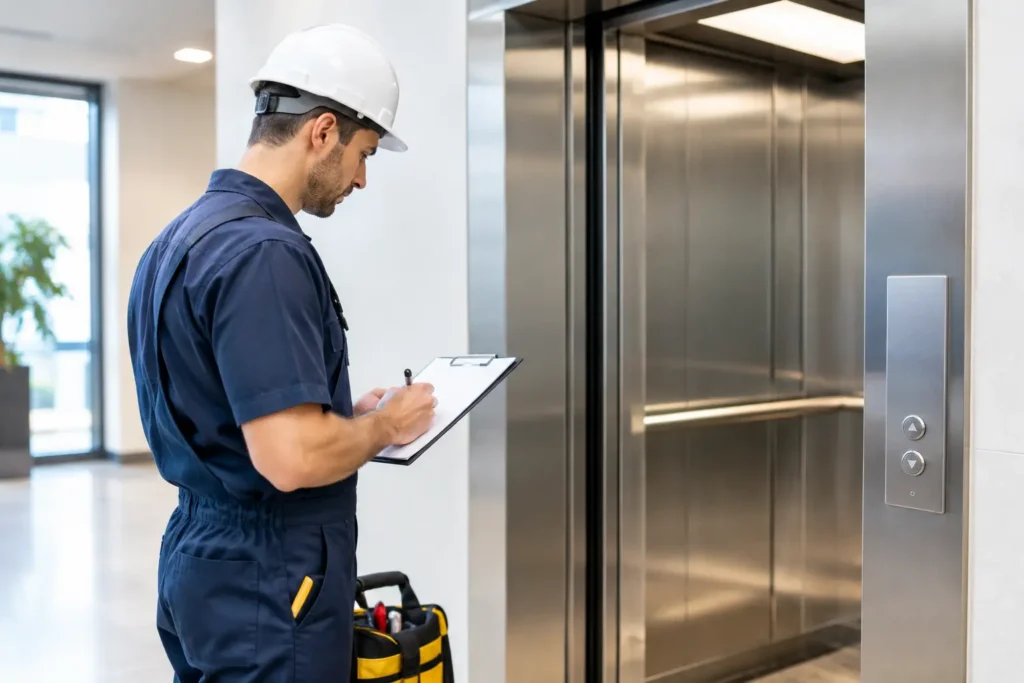
Building staff can catch visible or audible changes during normal rounds without accessing restricted equipment areas. A short weekly walkthrough is especially valuable in high-traffic residential, healthcare, hospitality, office, and mixed-use properties.
Check that each elevator car is level with the landing floor when doors open. A noticeable gap, step up, or step down can create a trip hazard and should be reported promptly. Watch the doors through several cycles. They should open and close smoothly, reverse when an obstruction is detected, and avoid scraping, banging, hesitating, or reopening repeatedly.
Inside the car, verify that floor buttons, door-open and door-close buttons, alarm functions, lighting, ventilation, handrails, and emergency communication equipment appear intact and functional. Confirm that the car is clean, dry, and free of damaged finishes or loose ceiling panels. Water, debris, or vandalism in a cab can affect more than appearance – it can create hazards and contribute to equipment damage.
At each landing, look for damaged door panels, loose sills, debris in the door track area, burned-out indicator lights, or signs of moisture. Never attempt to clear a door sill with tools or force doors open. Report the condition to your elevator service company and keep passengers away from any unsafe entrance.
Monthly Building Operations Review
A monthly review connects day-to-day observations to larger building performance. Pull service tickets, review complaints from tenants or residents, and compare elevator interruptions with the prior month. A single callback may be normal. A recurring fault code, the same floor repeatedly going out of service, or an increase in door-related calls deserves focused attention.
Discuss these questions with your maintenance provider:
- Has the unit experienced repeat failures involving the same component or system?
- Are parts becoming difficult to source, discontinued, or subject to extended lead times?
- Is the equipment meeting expected traffic demand during peak periods?
- Have utility issues, water intrusion, temperature extremes, or construction activity affected performance?
- Are there code updates, inspection items, or accessibility concerns that require planning?
This conversation can prevent reactive spending. For example, replacing a worn door operator component during scheduled service may be less disruptive than responding to a locked-open door during the morning rush. On the other hand, not every aged component requires immediate replacement. The right timing depends on condition, failure history, availability, budget, and the elevator’s role in the building.
Machine Room and Equipment Space Conditions
Only authorized personnel should enter machine rooms, control spaces, hoistways, or elevator pits. Building staff can still help maintain the conditions around these areas. Keep access routes clear, ensure doors remain secured, and do not use elevator equipment rooms for storage.
Confirm that the space is reasonably clean, dry, appropriately lit, and protected from unauthorized access. Report water leaks, unusual heat, strong odors, corrosion, pest activity, or electrical concerns immediately. Water intrusion is particularly serious because it can damage controllers, wiring, door equipment, and safety circuits.
Where building systems affect elevator operations, coordinate with the appropriate trades. HVAC problems, roof leaks, plumbing leaks, power-quality events, and fire alarm interface issues can all lead to elevator trouble. Clear ownership between building staff and service vendors reduces delays when a problem crosses system boundaries.
What Qualified Technicians Should Address
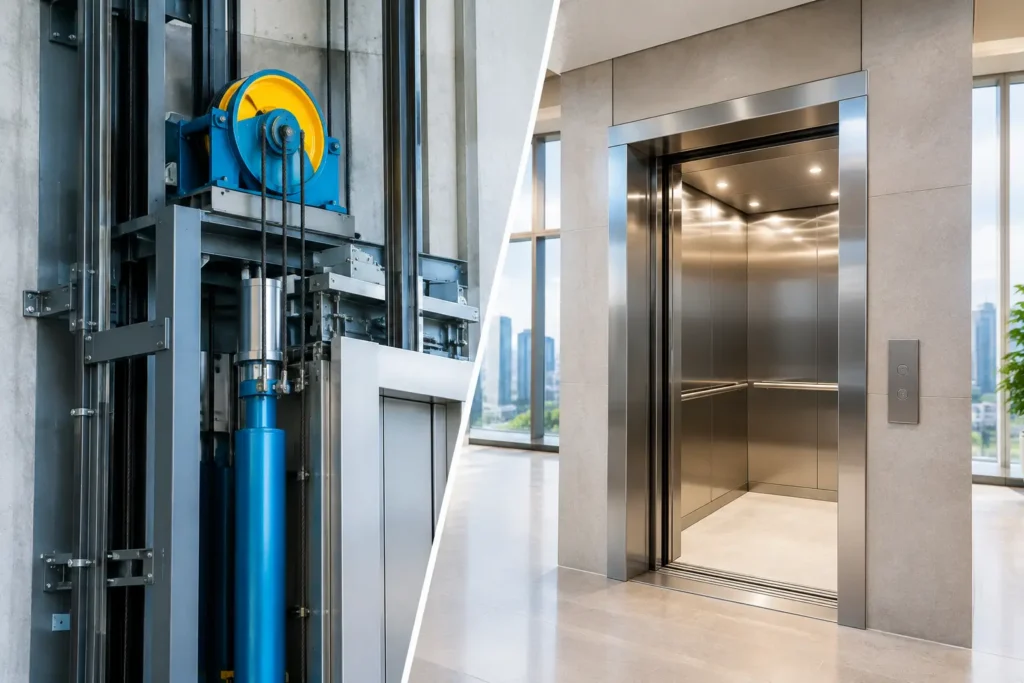
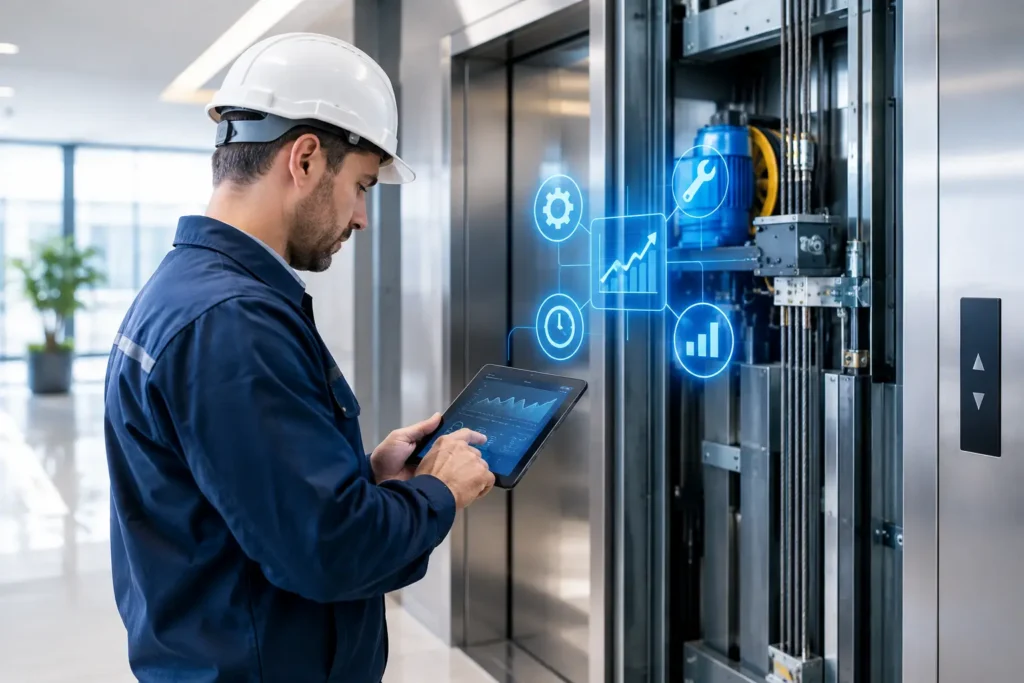
Routine elevator maintenance requires trained, authorized technicians who can safely access and test the equipment. Their work typically includes inspecting door systems, drive and control equipment, safety devices, traveling cables, governors, brakes, oil levels where applicable, relays or electronic components, and the condition of mechanical connections.
Technicians also perform adjustments, lubrication where specified by the manufacturer, cleaning, diagnostic testing, and targeted repairs. The exact scope should reflect the elevator’s design, age, usage, environment, and maintenance agreement. A lightly used two-stop hydraulic elevator and a heavily used high-rise traction group need different maintenance strategies.
Ask for service documentation that is specific enough to be useful. “Checked elevator” does not help a property manager plan. A stronger report identifies work completed, findings observed, recommended next steps, parts needed, and the equipment’s operational status when the technician left.
Plan for Emergencies Before They Happen
Elevator entrapments and shutdowns require calm, coordinated response. Building teams should know who is authorized to contact the elevator service provider, where to direct emergency responders, and how to communicate with passengers. Do not attempt to remove passengers from a stalled elevator unless you are trained and authorized to do so.
Test and maintain emergency communication systems according to applicable requirements. If a passenger uses the car’s emergency phone or call button, the response path must be reliable and current. Update contact information whenever building management, monitoring providers, or emergency procedures change.
It is also wise to establish communication expectations with your elevator partner. For critical outages, confirm how service requests are submitted, what information helps dispatch the right technician, and how updates will be delivered. Fast response is essential, but accurate information at the start can reduce diagnostic time once help arrives.
Use Maintenance Data for Capital Planning
Preventive maintenance extends equipment life, but it does not eliminate eventual modernization needs. Controllers, door operators, fixtures, drives, communications equipment, and other components can become obsolete or increasingly expensive to maintain. Waiting for total failure may leave a building with fewer options, longer downtime, and rushed purchasing decisions.
Review your elevator portfolio annually with a long-term perspective. Look at callback frequency, repair costs, parts availability, ride quality, energy use, code requirements, and tenant expectations. A modernization may be justified when repeated repairs no longer deliver dependable performance, but an honest assessment may also show that a focused repair can safely extend service life.
For owners managing several properties, standardizing documentation and reviewing trends across the portfolio can reveal where capital dollars will have the greatest operational impact. It also supports more predictable budgeting instead of treating every major repair as a surprise.
A Checklist Is Most Valuable When Someone Owns It
The best maintenance program is not a binder that sits in an office. Assign responsibility for weekly observations, monthly record reviews, service-provider communication, and follow-up on recommendations. Make sure building staff know what to report and what not to touch.
Reliable vertical transportation is built through consistent attention, skilled service, and straightforward communication. When your checklist identifies a concern, address it while the repair is still planned work – not after it becomes the call every building team hopes to avoid.