
A stalled elevator changes the rhythm of a building immediately. Tenants cannot reach their offices, residents may lose dependable access to their homes, deliveries stop, and a trapped passenger situation becomes a safety priority. An emergency elevator repair service is not simply about getting a car moving again. It is about securing the equipment, protecting people, identifying the real fault, and restoring reliable operation with clear communication at every step.
For property owners, facility managers, and building engineers, the first decisions made during an outage can affect safety, downtime, repair cost, and liability. A prompt, disciplined response helps prevent a manageable equipment issue from becoming a longer disruption.
When Emergency Elevator Repair Service Is Needed
Not every elevator concern requires an after-hours emergency call, but certain conditions do. A passenger entrapment, an elevator stopped between floors, doors that will not open or close safely, smoke or burning odors, water entering the hoistway, repeated shutdowns, or a car making abnormal noises should be treated as urgent. The elevator should be taken out of service until a qualified technician has assessed it.
A single car outage can also be an emergency when it removes the only accessible route in a building, affects patient transport, blocks critical operations, or leaves a high-rise without adequate vertical transportation. Context matters. A minor leveling issue in a building with several operating cars may be scheduled quickly during business hours. The same issue in a single-elevator senior living community may require immediate attention.
If passengers are trapped, keep communication calm and direct. Advise them not to force doors open or attempt to climb out of the car. Contact emergency responders when there is a medical concern, fire, smoke, or other life-safety risk, then contact your elevator service provider. Building staff should not attempt a rescue unless they are specifically trained and authorized to do so.
What a Professional Emergency Response Should Look Like
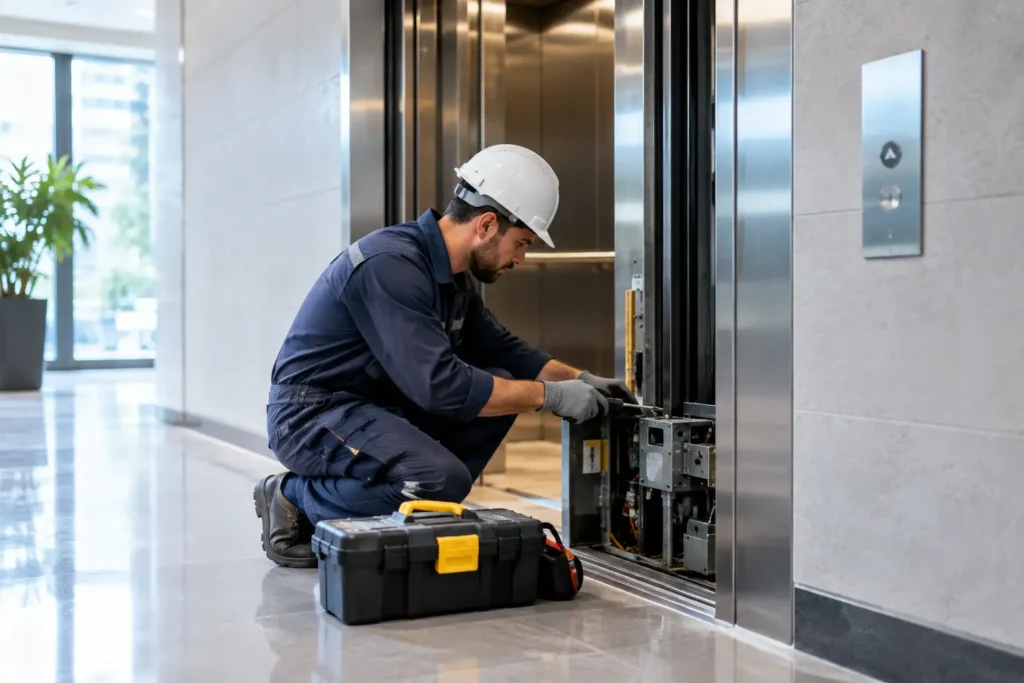
Fast arrival matters, but a good response does not end at the machine room or controller. The technician should first confirm the condition of passengers and the elevator, secure the area, and safely return trapped occupants to a landing when necessary. The car may remain out of service while the underlying fault is investigated.
Modern elevator systems can record fault codes, but a code is a starting point, not a diagnosis. A qualified technician evaluates the controller, door operation, leveling system, brake circuit, safety chain, traveling cable, power supply, and related components. They also consider what happened immediately before the shutdown: a power event, water intrusion, unusual door activity, a recent construction project, or a recurring intermittent issue.
The strongest service partners explain findings in practical terms. Building stakeholders should know what failed, why it likely failed, whether the repair is temporary or permanent, what parts are needed, and when the elevator can safely return to service. Transparent diagnostics help teams make sound decisions without being pressured into unnecessary replacement.
The Difference Between Restarting and Repairing
A reset may restore an elevator temporarily, particularly after a brief power disturbance or a nuisance fault. That does not always mean the issue is resolved. Repeated resets can mask a failing component, a door system problem, or an electrical condition that will trigger another shutdown at the worst possible time.
The right repair depends on the equipment’s age, condition, usage, and maintenance history. For example, a worn door contact may be a straightforward replacement. Recurring door faults, however, can point to misalignment, worn rollers, damaged wiring, improper settings, or a broader need for door operator work. Likewise, a controller fault may involve a replaceable board, but an obsolete system with limited parts availability deserves a larger conversation about modernization planning.
This is where an honest recommendation has real value. Emergency work should restore safety and operation first. It should also provide enough information for owners to decide whether a follow-up repair, preventive maintenance adjustment, or capital improvement will reduce future risk.
Common Causes of Unexpected Elevator Shutdowns
Elevators are complex systems operating under daily mechanical, electrical, and environmental stress. Door equipment is one of the most common sources of service calls because doors open and close thousands of times over their useful life. A misaligned door, obstructed track, failed sensor, worn clutch, or deteriorating roller can prevent the system from completing its safety sequence.
Electrical issues are another frequent cause. Power fluctuations, failed relays, aging contactors, loose connections, controller board faults, and battery problems can stop a car or create intermittent behavior. Water can be especially damaging. Moisture in a pit, hoistway, machine room, or controller can corrode components and create unsafe operating conditions.
Other failures develop gradually. Brake wear, leveling sensor problems, deteriorated traveling cables, hydraulic leaks, and worn drive components may give early warnings before a shutdown occurs. Those warnings can include slow door movement, inconsistent floor leveling, unusual sounds, longer travel times, or fault messages that appear and disappear. Reporting these changes early gives a maintenance provider a better chance to correct them before they become an emergency.
What Building Staff Should Do During an Outage
A clear internal protocol keeps an outage from becoming more disruptive than it needs to be. Post appropriate signage, direct occupants to working elevators or stairs where safe and accessible, and notify security, the front desk, and relevant tenant contacts. If the elevator is the primary accessible route, communicate alternatives and expected updates with care.
When calling for service, provide the building address, elevator location or unit identifier, whether anyone is trapped, the car’s last known position, and any observed symptoms. Let the dispatcher know about recent power outages, flooding, construction, or prior service calls. These details help the technician arrive prepared and can shorten diagnosis time.
Avoid allowing untrained personnel to reset breakers, access elevator spaces, or attempt to release passengers. A well-intentioned action can damage equipment, compromise evidence of the fault, or create a serious safety hazard. Keep the area controlled until the technician confirms the elevator is safe to use.
How Preventive Maintenance Reduces Emergency Calls
Emergency service cannot be eliminated completely. Storms, utility interruptions, vandalism, and sudden component failures happen. Yet many urgent calls can be reduced through consistent preventive maintenance that is tailored to the equipment and the building’s traffic patterns.
Effective maintenance is more than a routine visit and a signature on a log. It includes inspecting wear items, cleaning and adjusting door equipment, reviewing fault history, testing safety devices, checking ride quality and leveling, and identifying components approaching end of life. The goal is to make informed repairs before an interruption affects residents, tenants, visitors, or building operations.
Documentation matters just as much. Service records reveal patterns that may not be obvious from one call to the next. If one elevator repeatedly experiences door faults after heavy traffic periods, or if shutdowns follow power events, the maintenance plan can be adjusted to address the actual condition instead of treating each event as isolated.
Planning After the Immediate Repair
Once the elevator is back in service, ask for a clear closeout discussion. Confirm what was repaired, what was tested, whether there are remaining concerns, and whether any follow-up work is recommended. A temporary repair may be the responsible choice when a specialty part must be ordered, but the path to permanent correction should be documented.
For aging equipment, emergency calls can become useful planning signals. Rising repair frequency, obsolete components, longer lead times for parts, and repeated interruptions may indicate that modernization is more cost-effective than continuing reactive repairs. That does not automatically mean a full replacement is necessary. Targeted controller, door operator, fixture, or drive upgrades can often improve reliability while extending the useful life of the overall system.
Ascent Elevators approaches emergency calls with the same focus used in long-term maintenance: protect people first, communicate clearly, and recommend the work that best supports the building’s future performance.
A dependable elevator program is built before the next outage occurs. Keep current service records, establish escalation contacts, make sure building staff know the response protocol, and work with a provider that treats every emergency repair as both an urgent safety task and an opportunity to prevent the next disruption.