
A failed elevator inspection can do more than interrupt service. It can leave tenants without accessibility, delay move-ins, create liability concerns, and force a building team into rushed repairs. Elevator code compliance requirements are designed to prevent those situations by setting a clear baseline for safe operation, inspection, testing, maintenance, and documentation.
For property owners and facility managers, compliance is not a one-time project. It is an ongoing operating responsibility that changes as equipment ages, codes are adopted locally, and repairs or modernization work alter the system. The most reliable approach is to treat compliance as part of a long-term elevator performance plan, not as a response to a notice from the authority having jurisdiction.
What elevator code compliance requirements cover
Elevators in the United States are generally governed by state and local rules that reference nationally recognized safety standards. The most common is ASME A17.1/CSA B44, the Safety Code for Elevators and Escalators. Many jurisdictions also reference related standards for inspection, maintenance, and existing equipment.
The national code is the starting point, not the final answer. States, cities, and local elevator authorities can adopt different editions, add requirements, or set their own inspection intervals and permitting processes. A requirement that applies to a commercial building in one Mid-Atlantic municipality may not apply in the same way to a residential property in another state.
That is why a building team should confirm three things before planning corrective work: which code edition the local jurisdiction enforces, whether local amendments apply, and whether the work requires a permit, inspection, or acceptance test. Assuming that every repair must meet the newest national code can lead to unnecessary scope. Assuming an older installation is exempt from all updates can create a safety and compliance gap.
New installations, existing elevators, and alterations
New elevator installations are typically expected to meet the code edition adopted when permits are issued, along with applicable building, fire, electrical, and accessibility rules. Existing elevators are treated differently. They are often allowed to remain in service under the code edition in effect when installed, provided they are maintained safely and meet any mandatory upgrades adopted for existing equipment.
An alteration can change the calculation. Replacing a controller, door equipment, cab interior, machine, or safety component may trigger specific requirements tied to the scope of work. Modernization is therefore an opportunity to improve reliability and user experience, but it must be planned with code implications in mind. A clear survey before work begins helps avoid surprise corrections after equipment has been ordered or installed.
Inspections and testing are not the same thing
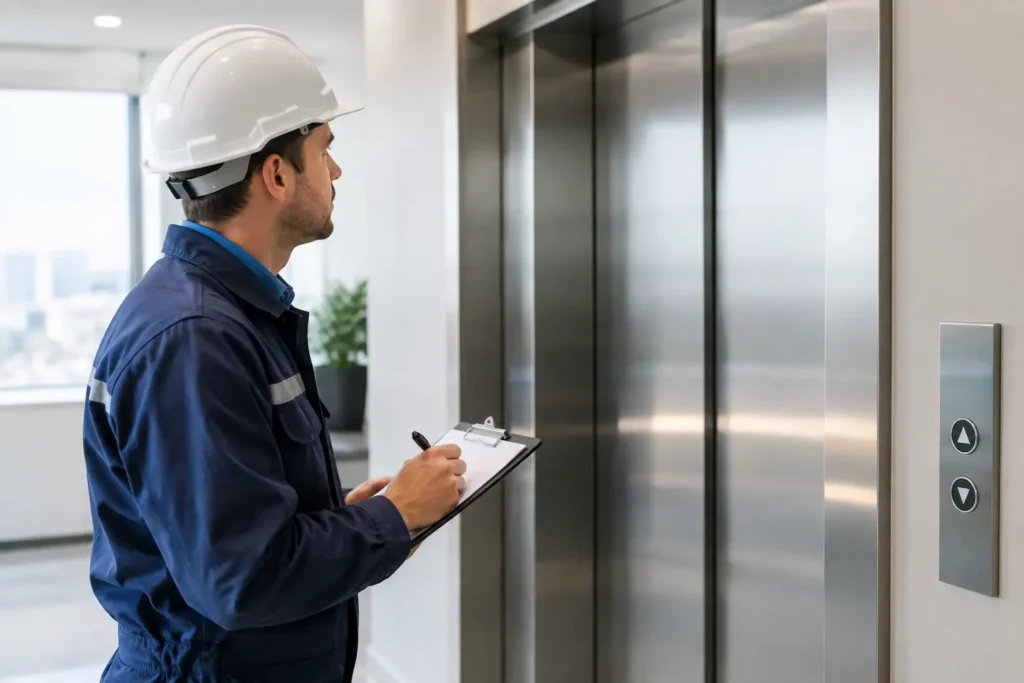
Routine maintenance supports code compliance, but it does not replace required inspections and tests. Maintenance technicians examine equipment regularly, address wear, and identify developing issues. Inspectors and witnesses verify that required safety devices and operating functions meet the standards enforced by the jurisdiction.
The required schedule varies by location and equipment type. Passenger elevators commonly require periodic inspections, while specific tests may occur annually, every few years, or on another schedule established by the authority having jurisdiction. Hydraulic elevators, traction elevators, private residence elevators, and platform lifts can each have different requirements.
Typical compliance activities may include annual safety testing, periodic full-load testing, governor testing, hydraulic pressure testing, fire service checks, emergency communication testing, and examination of door-reopening devices. The specific test procedure matters as much as the date on the calendar. A test must be performed, witnessed, documented, and corrected when deficiencies are found according to local rules.
Missing a required test can result in an expired certificate, a violation, or an order to remove the elevator from service. More importantly, it can leave a critical safety function unverified. Building teams should track due dates well in advance and schedule testing around tenant traffic, delivery windows, and planned shutdowns.
Accessibility and life-safety requirements
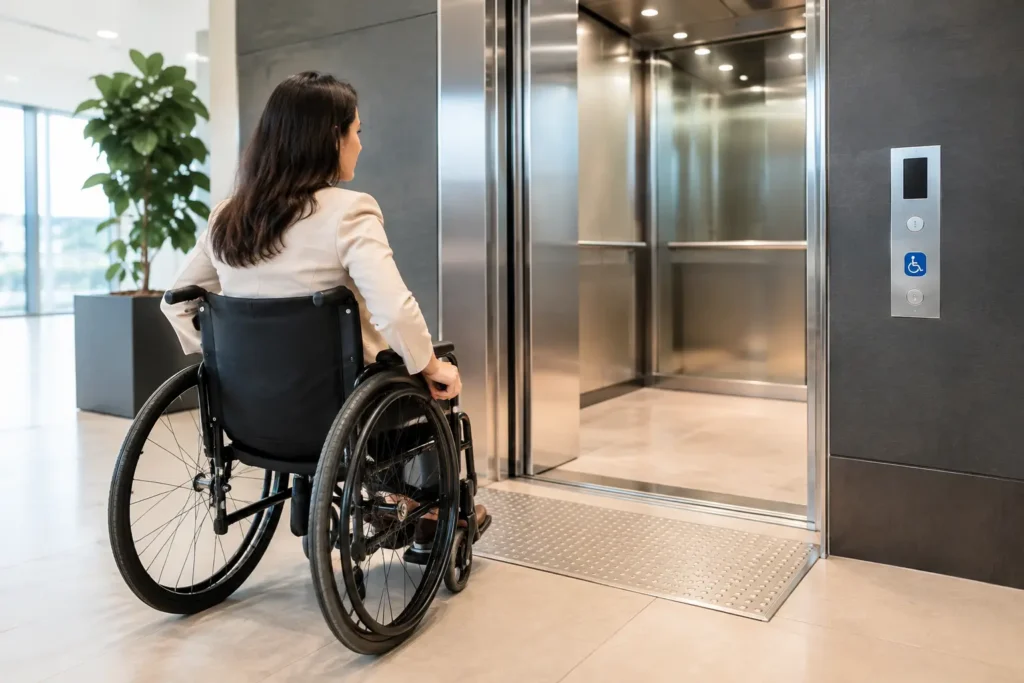
Code compliance also reaches beyond the machine room. Accessibility features are central to the passenger experience and may be required under the Americans with Disabilities Act, local building codes, or both. Depending on the elevator and the work being performed, this may involve cab controls, Braille and tactile markings, audible floor signals, visual indicators, handrails, door timing, and communication features.
Life-safety systems require equal attention. Firefighters’ emergency operation, recall functions, smoke detector interfaces, emergency power operation, and two-way communication must work together as intended. In an emergency, a disconnected interface or improperly configured controller is not a minor defect.
Older properties present a practical challenge: not every existing elevator must be rebuilt to current new-construction standards immediately. However, jurisdictions may require selected upgrades when a building undergoes renovation, when a major elevator component is replaced, or when an inspector identifies a mandatory safety item. The right path depends on the equipment, the adopted code, and the project scope.
Documentation protects the building and the owner
An elevator can be mechanically sound and still create a compliance problem if required records are missing. Inspection certificates, test reports, maintenance logs, repair records, permits, and correction notices should be organized and accessible to the property team.
Good documentation does more than satisfy an inspection. It gives managers a history of recurring faults, demonstrates that safety work was completed, and supports more accurate capital planning. If a door operator has required repeated repairs or a controller is becoming difficult to support, the service history makes the decision to repair or modernize far more transparent.
Maintain a current equipment file for each unit, including its identification number, installed equipment details, most recent inspection results, active violations, test due dates, and contact information for the service provider. When ownership or building staff changes, this record prevents compliance knowledge from leaving with the previous manager.
A practical compliance plan for aging equipment
The best time to identify code exposure is before an inspection deadline or equipment failure. Start with a condition assessment that reviews the elevator’s age, service history, current code status, safety devices, accessibility features, and parts availability. This creates a prioritized list rather than a vague recommendation to replace everything.
Next, separate immediate violations from recommended reliability improvements. A failed emergency phone, an overdue safety test, or a nonfunctioning door protection device needs prompt correction. A cosmetic cab refresh or a future controller upgrade may be valuable, but it can be budgeted over a longer horizon. Transparent priorities help owners direct capital where risk and operational impact are highest.
Finally, coordinate planned work with the local authority before scheduling a shutdown. Permits, drawings, acceptance testing, and final sign-off may affect the project timeline. For occupied buildings, communication is equally important. Tenants need realistic notice, accessible alternatives when available, and a clear point of contact during outages.
When to call for a compliance review
A compliance review is especially useful after receiving a violation notice, before a major renovation, when purchasing a building, or when an elevator has a history of failed inspections. It is also prudent when your maintenance records are incomplete, the certificate is approaching expiration, or original equipment is becoming obsolete.
A qualified elevator partner should explain what is required now, what may be triggered by future work, and what remains optional. That distinction matters. Honest recommendations protect safety without turning every service visit into an unnecessary replacement proposal.
Ascent Elevators helps building teams evaluate equipment condition, complete required testing and corrections, and plan upgrades around operational and budget needs. The goal is straightforward: keep the elevator safe, available, documented, and ready for the next inspection long before an inspector arrives.
Compliance works best when it is quiet and routine. With a clear record, a realistic testing calendar, and responsive technical support, your elevators can remain a dependable part of the building rather than the next urgent issue on the facilities list.