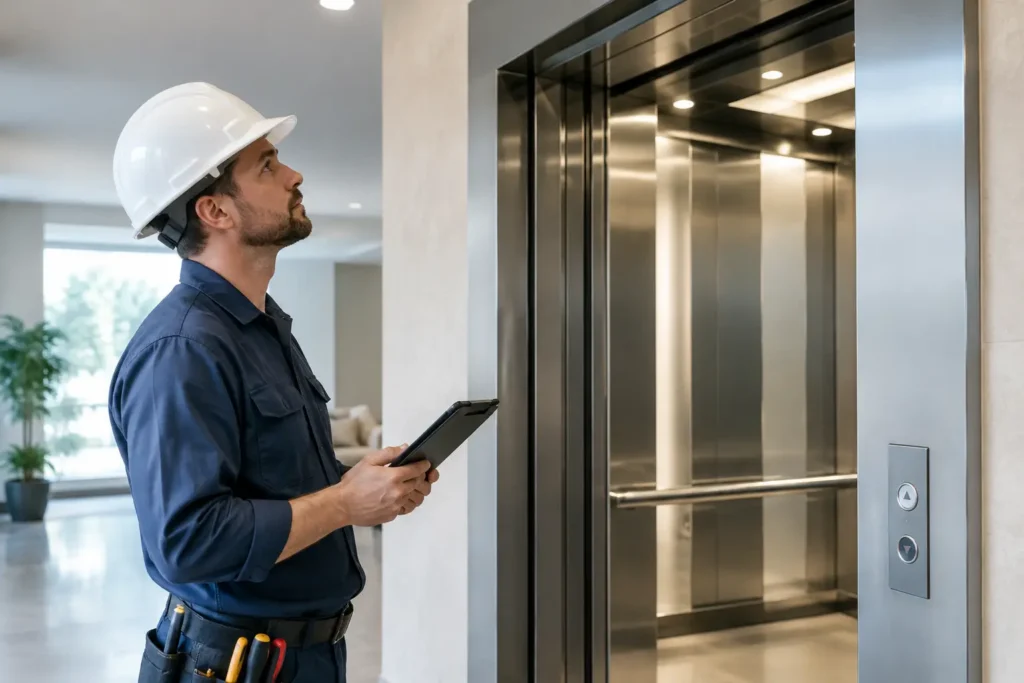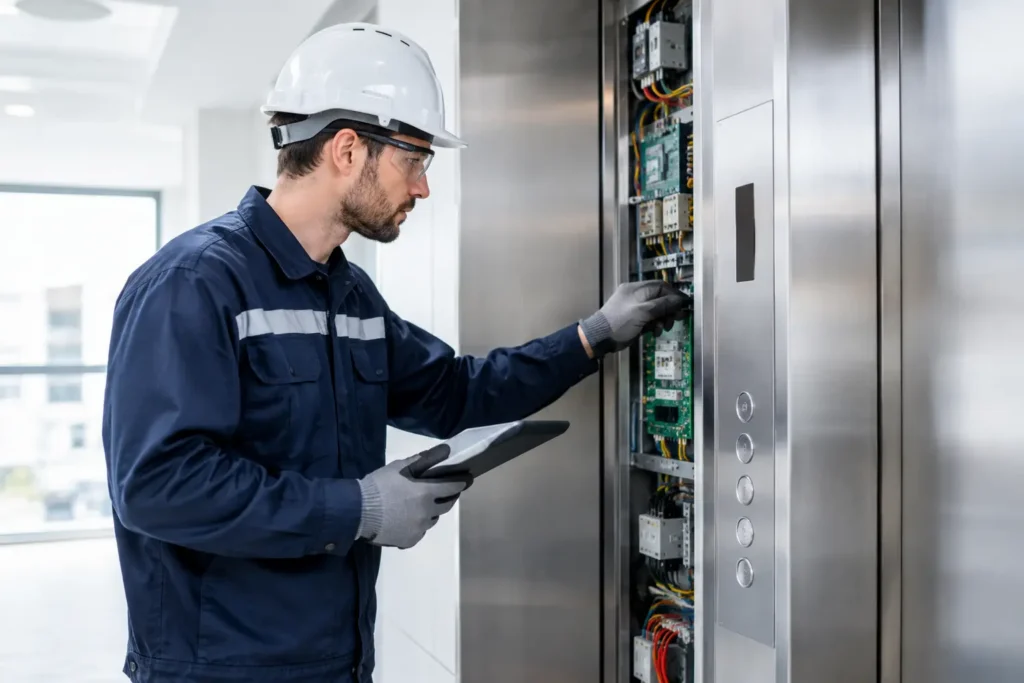

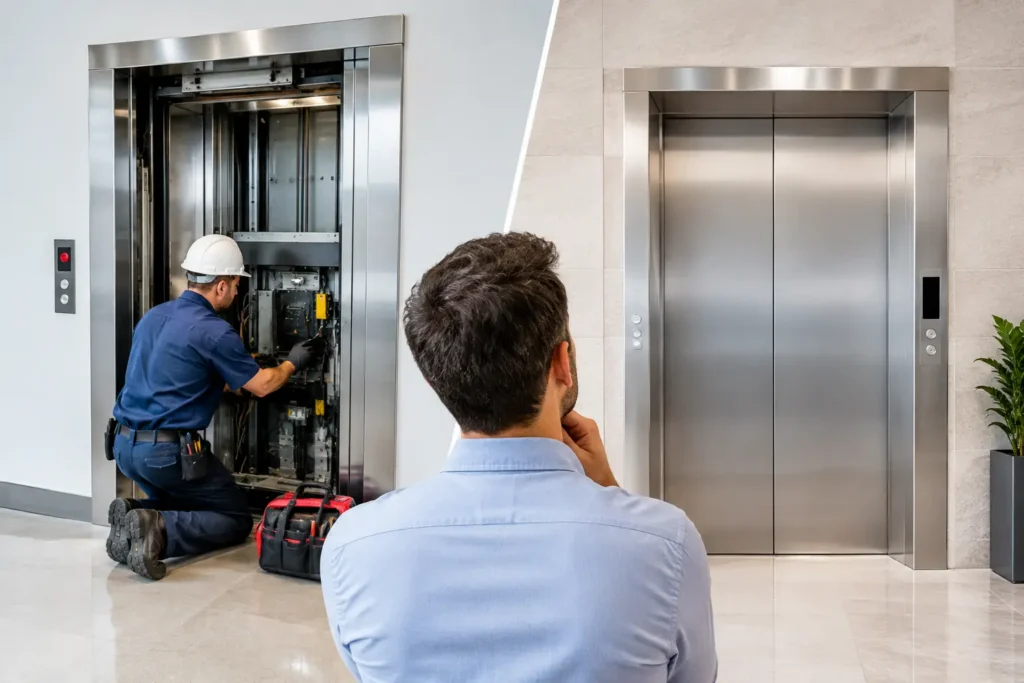
A door that reopens unexpectedly, a car that levels poorly, or a controller that produces recurring faults can quickly turn elevator repair versus replacement into an urgent building decision. For property owners and facility managers, the right answer is rarely based on the age of the elevator alone. It depends on the safety condition of the equipment, the pattern of breakdowns, parts availability, code requirements, passenger expectations, and the building’s capital plan.
A well-maintained elevator can often remain in service for decades. At the same time, continuing to repair a system that is unreliable, difficult to support, or no longer aligned with accessibility and safety requirements can create higher costs over time. A qualified evaluation should provide a clear picture of both paths, including what each option means for uptime, budget, and long-term building performance.
When Elevator Repair Is the Right Decision
Repair is often the most practical choice when the issue is isolated and the rest of the system is performing reliably. A worn door operator component, damaged rollers, a failed relay, a leveling concern, or a fixture problem may be corrected without changing the core elevator system. These repairs can restore safe operation quickly while preserving capital for larger priorities.
The key question is not whether an elevator has needed service. Every elevator needs service over its lifecycle. The question is whether the repairs are predictable, effective, and proportionate to the value they deliver. If the equipment has a stable maintenance history, replacement parts are available, and shutdowns are limited, targeted repair may be the responsible investment.
Signs a Repair May Be Enough
A repair-first approach generally makes sense when recent issues have identifiable causes rather than repeating failures across multiple components. It is also appropriate when the controller, machine equipment, hoistway doors, and safety devices remain serviceable and supported.
Consider repair when the equipment meets current applicable requirements, the elevator returns to normal performance after service, and the cost of work is modest compared with modernization or replacement. A transparent diagnostic report should explain the failed component, why it failed, what work is recommended, and whether related parts should be monitored. That level of detail helps building teams avoid both unnecessary upgrades and short-term fixes that simply defer an expected failure.
Repair can be especially valuable for buildings that need to control near-term spending. A focused project may address a reliability concern now while allowing the owner to schedule a broader improvement project during a future budget cycle. The plan should still account for lead times, parts availability, and the possibility that aging equipment may require more extensive work later.
When Repair Starts to Cost More Than It Saves
Repeated service calls are one of the clearest warnings that a repair-only strategy may no longer be enough. Frequent shutdowns disrupt tenants, visitors, staff, deliveries, and emergency access. In multifamily properties, they can drive resident frustration. In commercial settings, elevator downtime can affect lease satisfaction, operational continuity, and the public perception of the property.
The service invoice is only one part of the cost. Building teams should also consider staff time spent coordinating calls, tenant communications, temporary accessibility arrangements, after-hours service, and the risk of equipment being out of service when it is needed most. A lower-cost repair can become expensive if it does not resolve the underlying condition.
Parts obsolescence is another critical factor. Older controllers, drives, door equipment, and relay-based systems may still be repairable, but sourcing components can become slow, costly, or uncertain. In some cases, a component can be rebuilt or adapted. In others, the building may be relying on limited used inventory with no assurance of long-term support.
When a system is increasingly difficult to maintain, a service provider should state that plainly. Honest recommendations are not about pushing replacement. They are about helping stakeholders understand when the risk of continued operation is rising and when proactive planning gives the building more control.
Elevator Repair Versus Replacement: What Replacement Really Means
Full elevator replacement is appropriate when the existing equipment has reached the end of its useful life, cannot be dependably supported, or requires extensive work across major systems. It can involve replacing the controller, machinery, car components, fixtures, wiring, door equipment, or the complete elevator package, depending on site conditions and project goals.
Replacement is typically a larger capital decision, but it offers a reset for reliability, supportability, and passenger experience. Newer systems can provide improved diagnostics, more efficient operation, updated finishes, better accessibility features, and equipment designed around current codes and available parts. For a building undergoing a major renovation or repositioning, replacement may also support the property’s visual and operational goals.
That said, replacement is not automatically the best answer for every older elevator. Some systems can benefit from modernization, which upgrades selected major components without replacing every part of the installation. For example, a building may retain a serviceable elevator cab while installing a new controller, door operator, fixtures, and communication equipment. The right scope depends on a detailed assessment of the entire system.
Factors That Point Toward Replacement or Modernization
Replacement or modernization deserves serious consideration when failures are recurring across several systems, critical parts are obsolete, or repair costs continue to increase without improving uptime. It may also be the better path when the elevator’s performance no longer meets the building’s needs, such as slow travel, frequent door faults, poor leveling, inadequate capacity, or an outdated appearance in a renovated property.
Code compliance can also shape the decision. Requirements vary by jurisdiction and project scope, and certain upgrades may trigger work that must meet current standards. Fire service operation, emergency communications, accessibility features, door protection, and safety testing requirements should be evaluated early. A careful assessment helps avoid discovering necessary work after a project has already been priced and scheduled.
For buildings with a single elevator, planned replacement can be less disruptive than waiting for a major failure. Advance planning allows management to coordinate resident or tenant communication, temporary access procedures, project timing, and construction logistics. It also reduces the pressure to make a capital decision during an emergency.
Compare the Full Cost, Not Just the Proposal Price
A repair proposal and a replacement proposal are not directly comparable unless the building evaluates the full operating picture. Repair has a lower upfront cost and may be the best choice for equipment with years of reliable service ahead. Replacement requires a larger initial investment but can reduce unpredictable outages, recurring parts expenses, and the burden of supporting obsolete systems.
Ask for a lifecycle view. This should include the condition of the controller, machinery, doors, cab, traveling cable, wiring, safety devices, and fixtures; the anticipated availability of parts; expected maintenance needs; likely downtime; and any code-related work. A building should also understand what is included during construction, how long the elevator may be out of service, and what support will be available after project completion.
The quality of the evaluation matters as much as the recommendation. Experienced union technicians can identify the difference between a component-level failure and a system-wide reliability issue. They can also explain the options in practical terms, giving owners and facility teams the information needed to make a defensible decision.
Build a Plan Before the Equipment Forces One
The strongest elevator decisions are made before service issues become emergencies. Maintenance records, callback history, inspection findings, and repair trends can reveal whether a system is stabilizing or declining. Reviewing this information annually gives building stakeholders time to forecast capital needs and prioritize projects across a portfolio.
For some properties, the answer will be a targeted repair followed by closer monitoring. For others, a phased modernization plan will provide the best balance of budget control and improved reliability. And when equipment has become unsafe, unsupported, or persistently unreliable, replacement may protect the building from greater disruption ahead.
Ascent Elevators approaches these decisions with clear diagnostics, responsive service, and recommendations based on the condition of the equipment and the needs of the property. The most useful next step is a professional assessment that gives your team a practical path forward, before the next outage sets the schedule for you.