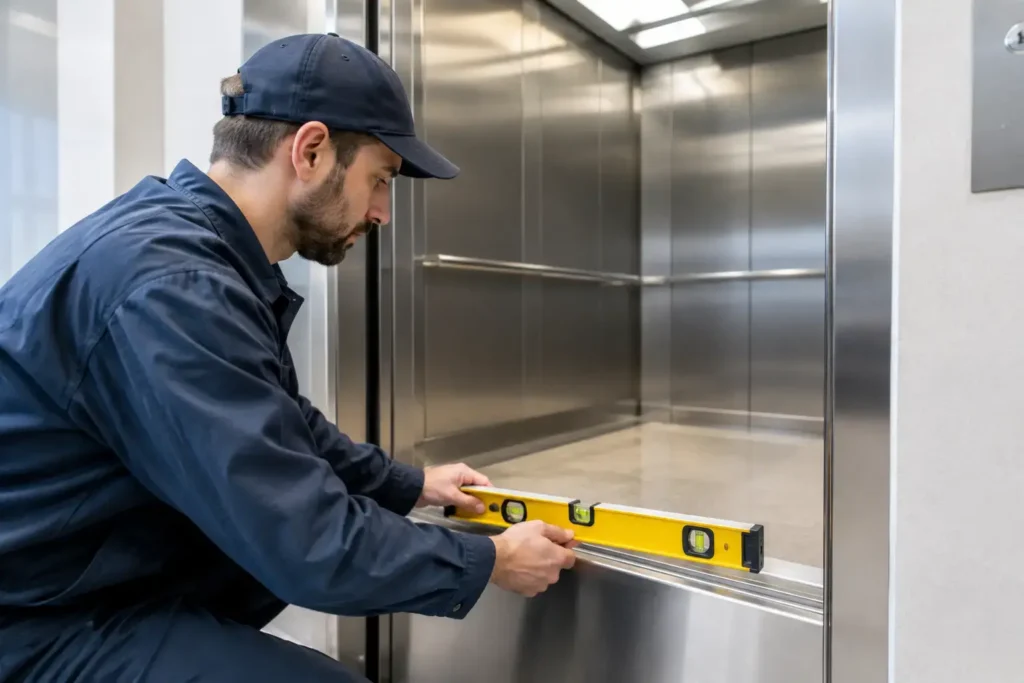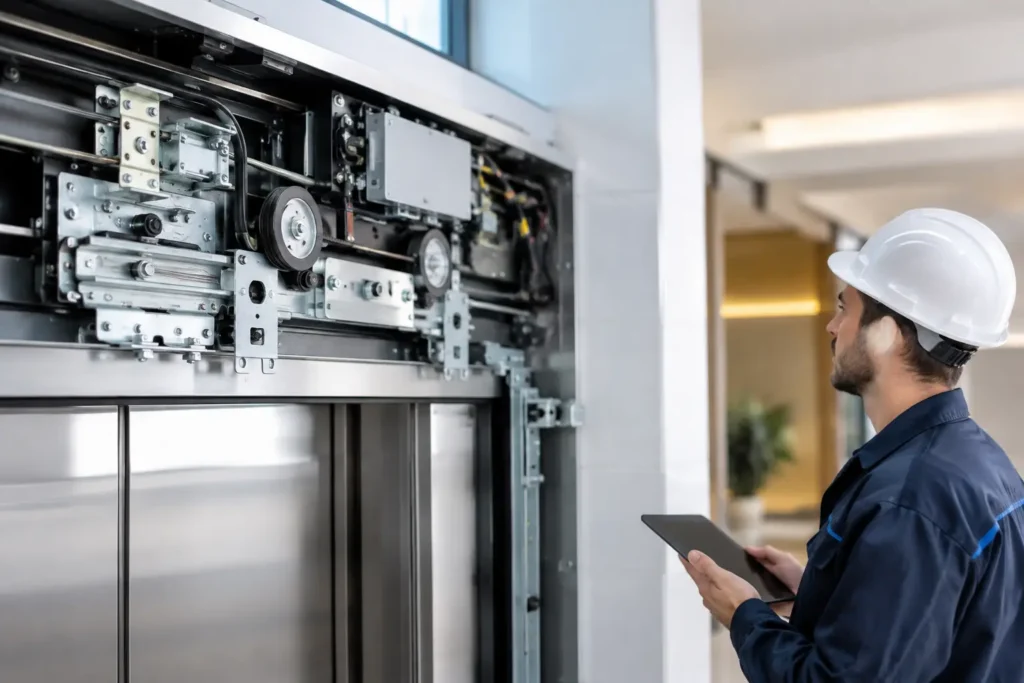

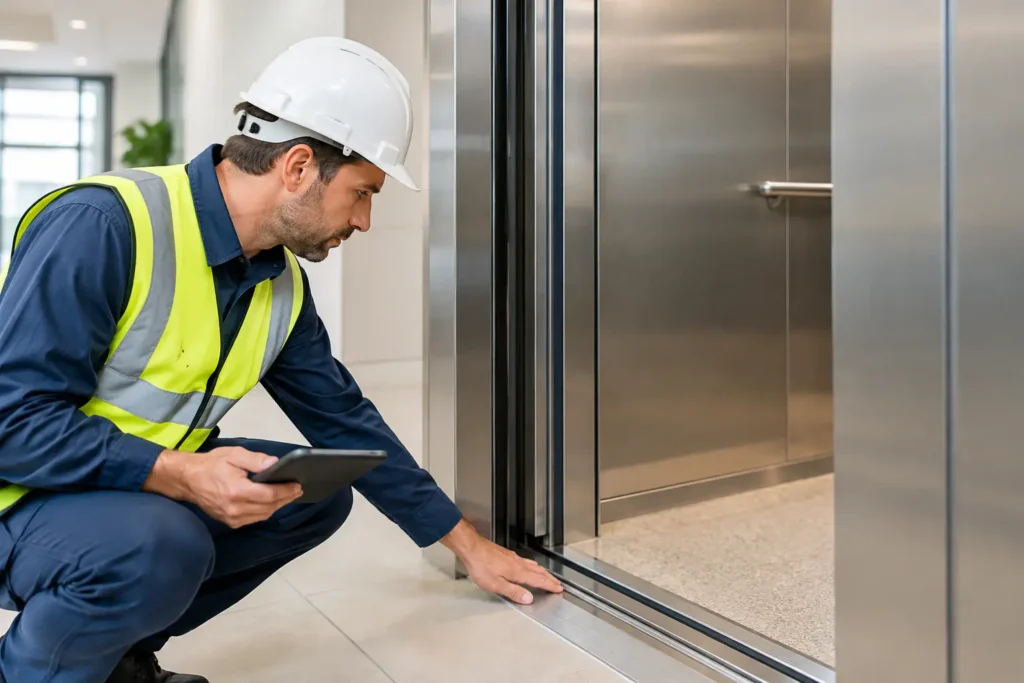
A floor-level mismatch of even half an inch can create a trip hazard, an accessibility concern, and a frustrating interruption for tenants. So, what causes elevator leveling errors? Usually, the issue is not one isolated part. It is a signal that the elevator’s braking, sensing, drive, or mechanical systems need careful diagnosis.
For property teams, an elevator that stops above or below the landing is more than an inconvenience. Repeated leveling problems can lead to callbacks, passenger complaints, equipment downtime, and potential code concerns. The right response is a qualified inspection that identifies the underlying condition rather than repeatedly adjusting the symptom.
What Causes Elevator Leveling Errors?
Leveling is the process that brings an elevator car flush with the building floor after it reaches a landing. The elevator controller uses feedback from its position system and speed information from the drive system to slow the car, stop it, and make fine corrections when necessary.
A leveling error occurs when the car stops too high or too low, or when it drifts after coming to a stop. The cause can vary by elevator type, age, traffic pattern, and equipment condition. On an older hydraulic elevator, fluid and valve performance may be central to the issue. On a traction elevator with a modern controller, encoder feedback, brake response, or software settings may deserve closer attention.
This is why accurate diagnostics matter. A quick adjustment may improve the condition temporarily, but it will not correct a worn component, an intermittent sensor, or a drive system that is losing reliable feedback.
Worn or misadjusted position sensors
Elevators rely on sensors, switches, tape readers, encoders, or other position devices to determine where the car is in the hoistway. When those components become dirty, worn, loose, or misaligned, the controller may receive an inaccurate position signal.
The result can be inconsistent leveling. The elevator may level properly at some floors but not others, or it may perform well during a technician’s visit and act up later. Intermittent faults are particularly important to document because they can point to loose connections, contamination, vibration, or declining electronic components rather than a simple setting issue.
Brake wear and traction system issues
On traction elevators, the machine brake must hold the car securely once it reaches the landing. If brake components are worn, improperly adjusted, contaminated, or slow to engage, the car can move slightly after stopping. That movement may leave the car floor above or below the landing threshold.
Traction conditions can also affect stopping performance. Worn sheaves, rope conditions, improper traction, or changes in load can influence how predictably the car decelerates. A heavily used passenger elevator in an office building may show the issue more often during peak traffic, while a lightly used residential elevator may reveal it only under certain loading conditions.
Brake and traction work should never be approached as a guess. These are safety-critical systems that require trained elevator technicians, proper testing, and clear documentation of the repair performed.
Hydraulic valve and fluid problems
Hydraulic elevators have their own leveling challenges. The control valve regulates fluid movement to raise and lower the car. If the valve is worn, contaminated, or out of adjustment, it may not control the car’s final movement accurately.
Low fluid, degraded fluid, temperature changes, and internal leakage can also contribute to uneven stopping. For example, an elevator may settle below the floor after passengers exit because the hydraulic system cannot maintain the car’s position as intended. In other cases, the car may stop short or overshoot because valve response is inconsistent.
Some hydraulic leveling conditions can be corrected with maintenance and adjustment. Others indicate aging equipment that needs repair, component replacement, or a broader modernization plan. The practical decision depends on the elevator’s condition, service history, available parts, and the building’s long-term goals.
Drive, controller, and encoder faults
Modern elevator systems depend on electronic controls to manage speed, direction, and final leveling. A variable-frequency drive, controller board, or encoder that is not operating correctly can make the car stop inconsistently.
Encoders are especially significant because they provide speed and position feedback. If an encoder signal is weak or intermittent, the controller may not accurately calculate when to begin slowing down or when to make its final leveling correction. Electrical noise, damaged wiring, loose terminals, and aging circuit boards can create similar symptoms.
Because these faults may not be visible during a basic visual inspection, technicians may need to review fault logs, run the car under different loads, and test signals while the elevator is operating. Transparent diagnostics give building decision-makers a clearer basis for approving a repair rather than replacing parts without evidence.
Door-zone and landing-device concerns
The elevator must confirm that it is in the correct door zone before doors open at a landing. Problems with door-zone sensors, landing magnets, vanes, or related devices can affect how the system recognizes the final car position.
Sometimes the car may be physically close to level but the controller does not recognize its location correctly. Other times, a door-zone issue occurs alongside a genuine leveling problem. Either condition deserves attention. Doors should not open when the car is not properly positioned, and recurring door-zone faults can remove an elevator from service.
Why Elevator Leveling Errors Often Get Worse
Minor leveling inconsistencies rarely improve on their own. Elevator components experience normal wear, and repeated operation can make a marginal issue more noticeable. A brake that is beginning to lag, a valve that is gradually losing performance, or a sensor connection affected by vibration may eventually trigger more frequent shutdowns.
Environmental conditions can accelerate the problem. Machine-room heat, moisture, dust, oil contamination, power-quality issues, and temperature swings all affect equipment performance. Buildings with high traffic, freight use, or demanding loading patterns also place more stress on leveling systems.
Deferred maintenance is another factor. Preventive service does not eliminate every failure, but it gives technicians an opportunity to identify loose hardware, worn brake components, contaminated hydraulic fluid, unusual fault patterns, and changing ride quality before they become disruptive. For facilities teams managing multiple assets, consistent maintenance records also make capital planning more predictable.
How Property Teams Should Respond
When an elevator levels incorrectly, record the details before they are lost. Note the floor, date, time, car number, travel direction, approximate gap, passenger load, and whether the issue happened once or repeatedly. If the car drifted after stopping, include that detail. Clear observations help technicians reproduce the condition and reduce diagnostic time.
Do not attempt to correct leveling through informal adjustments or by resetting equipment repeatedly. An elevator may return to service after a reset while the underlying issue remains. If passengers can trip at the landing, doors are behaving unexpectedly, or the car is moving after it stops, remove the elevator from normal use as appropriate and request prompt professional service.
A qualified elevator contractor should inspect the relevant systems, test operation under appropriate conditions, review controller history, and explain the findings in practical terms. The recommendation may be a targeted repair, a preventive adjustment, replacement of a worn component, or modernization of an obsolete control system. The right scope should match the equipment’s actual condition, not a one-size-fits-all answer.
When Leveling Points to Modernization
A single leveling repair does not automatically mean an elevator needs modernization. However, recurring leveling calls on older equipment can be a useful warning sign. If replacement parts are difficult to source, controller diagnostics are limited, callbacks are increasing, or several related systems are aging, modernization may offer a more reliable long-term path.
Modernization can improve control accuracy, diagnostics, ride quality, and maintainability. It also requires thoughtful planning around budget, downtime, building use, and code requirements. For many properties, a phased approach is more sensible than waiting for repeated failures to dictate the schedule.
Ascent Elevators helps building teams evaluate leveling concerns with a safety-first, evidence-based approach. A clear diagnosis, responsive service, and honest recommendations help protect passengers while supporting the useful life of the equipment. When a car no longer meets the floor consistently, treating it as an early maintenance signal can prevent a small gap from becoming a larger operational problem.