
An elevator can run quietly for months and still have safety components that must be tested on a defined schedule. Elevator safety testing requirements exist to verify that critical systems will perform when they are needed, not simply that the car is moving on the day of an inspection. For property owners and facility teams, staying ahead of these tests protects passengers, supports compliance, and prevents a missed deadline from becoming an avoidable shutdown.
What elevator safety testing is designed to verify
Periodic testing evaluates the devices that protect passengers, technicians, and the public during unusual operating conditions. Depending on the equipment and the governing code, a test may confirm how the elevator responds to overspeed, unintended car movement, door obstruction, fire service operation, loss of normal power, or a mechanical fault.
Routine maintenance and periodic testing work together, but they are not interchangeable. A maintenance visit focuses on adjustment, lubrication, wear, performance, and developing issues. A required safety test is a documented examination of specific functions, performed at prescribed intervals and witnessed or accepted according to the rules of the local authority having jurisdiction.
That distinction matters when planning a building budget. A properly maintained elevator is generally more likely to pass testing with fewer corrective items, but a current maintenance contract does not eliminate the obligation to perform required tests or file the resulting documentation.
The code framework behind elevator safety testing requirements
Most U.S. jurisdictions base their elevator rules on versions of the ASME A17.1/CSA B44 Safety Code for Elevators and Escalators, along with the ASME A17.2 inspection guide. Local and state authorities adopt, amend, and enforce these standards, often on different timelines. Some cities or states also have their own forms, fees, inspector qualifications, testing notice requirements, and certificate renewal processes.
For that reason, there is no single testing calendar that applies identically to every building. The applicable requirements depend on where the building is located, its elevator type, the code edition adopted locally, the age of the installation, and whether modernization work has triggered additional compliance obligations.
A reliable service partner begins with the equipment and the jurisdiction, not a generic checklist. Building teams should confirm which agency regulates the elevator, the current certificate expiration date, the adopted code edition, and whether an independent inspector or jurisdictional witness is required. Keeping those details in a property compliance file prevents last-minute confusion when a test date approaches.
Common periodic test intervals
Many elevator programs include annual Category 1 tests and five-year Category 5 tests. Category 1 testing commonly addresses operational and safety functions that need more frequent confirmation, while Category 5 testing is more comprehensive and can include full-load, no-load, and safety-device tests.
Certain jurisdictions and equipment types may require other intervals or test categories. Hydraulic elevators, for example, may have pressure and valve-related testing requirements that differ from traction equipment. Firefighters’ emergency operation, standby power, emergency communications, and accessibility functions can also involve separate testing or coordination with other building systems.
The practical lesson is straightforward: use the intervals that apply to your specific equipment and local code, rather than assuming every elevator follows the same annual and five-year cycle.
What happens during a safety test
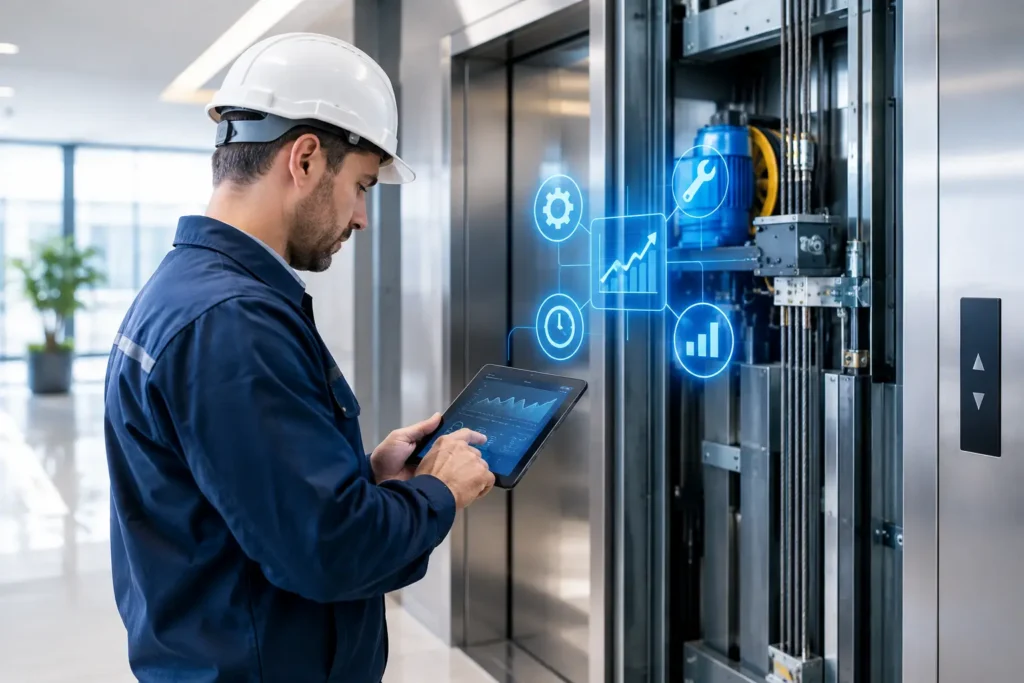
A well-planned test starts before the technician arrives. The elevator contractor reviews prior test reports, maintenance history, open repair recommendations, and any recurring operational complaints. This allows the team to identify likely issues in advance and reduce the chance that a minor repair delays certification.
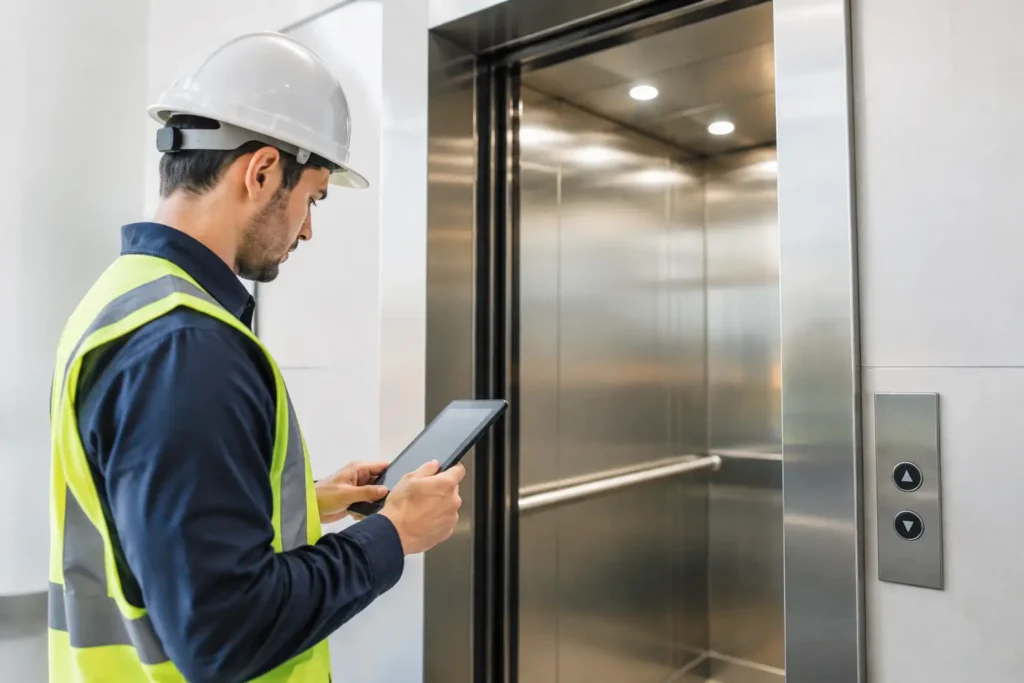
During testing, technicians may take the elevator out of normal service and use calibrated equipment, test weights, or specialized procedures. Work can involve the machine room or control space, hoistway, pit, car top, elevator car, and landing entrances. The scope varies by system, but common areas of review include:
- Door reopening devices, door protection, locks, and interlocks
- Brakes, governors, safeties, buffers, and unintended movement protection
- Emergency alarm, two-way communication, lighting, and rescue-related functions
- Fire service features, recall operation, and required interface with building systems
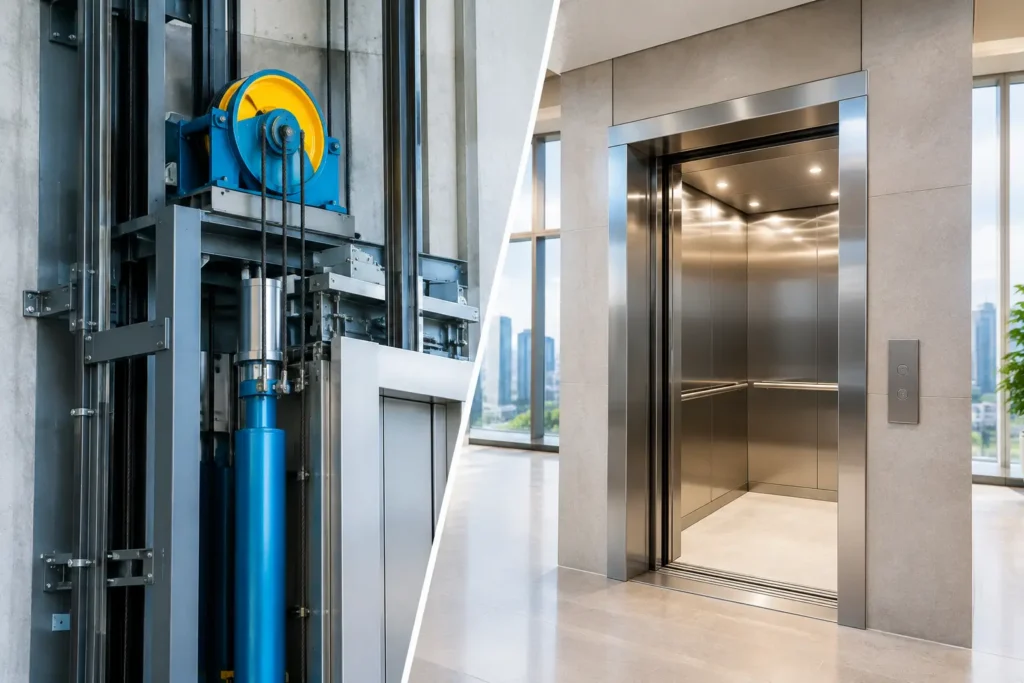
- Hydraulic piping, valves, pressure functions, or traction machine and suspension components
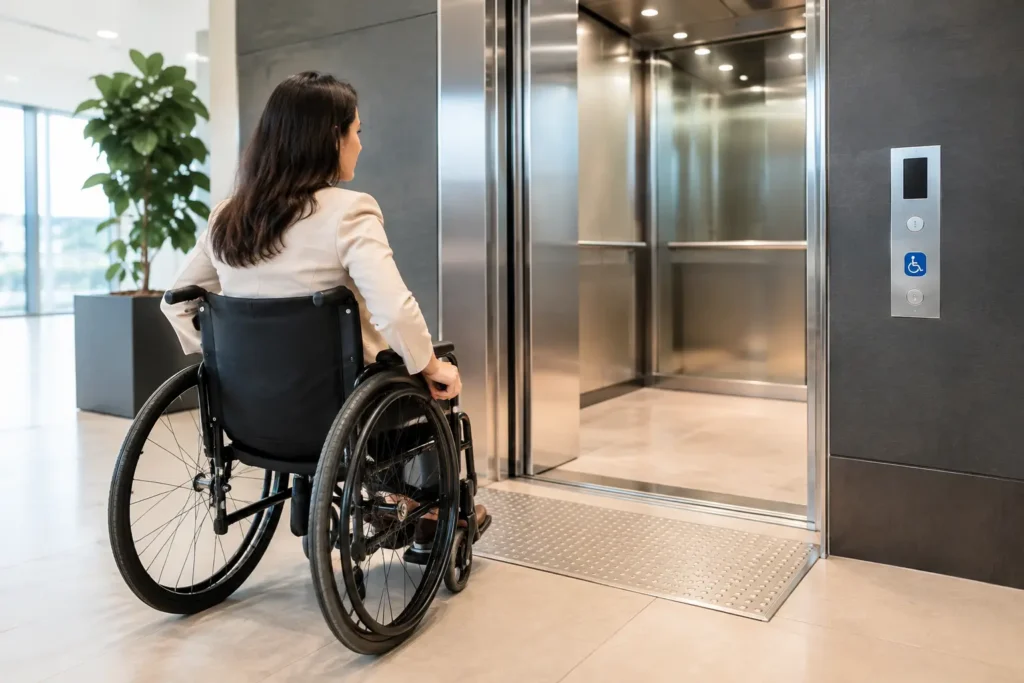
Testing can temporarily affect elevator availability. In a high-traffic office, healthcare, multifamily, or hospitality setting, the contractor and building team should coordinate a service window, tenant communication, loading needs, and accessibility coverage. A single-car building needs particularly careful planning, because taking its only elevator out of service can affect residents and visitors with mobility needs.
Inspections, test reports, and corrective work
A test is not complete simply because the equipment was examined. The results must be documented, and the local authority may need to review or witness portions of the process. If an inspector identifies violations or the elevator does not meet a tested requirement, corrective work may be necessary before a certificate is issued or renewed.
Not every finding carries the same urgency. Some conditions may require prompt correction but allow limited continued operation under local rules. Others may create an immediate safety concern and result in the elevator being removed from service. Your contractor should explain the condition in plain language, identify the code or safety basis, provide a clear repair path, and communicate how the issue affects occupancy and certification.
Transparent diagnostics are especially valuable with older systems. A failed component does not automatically mean full modernization is the only answer. Sometimes a targeted repair, adjustment, or upgrade resolves the issue. In other cases, repeated failures, unavailable parts, or obsolete safety features make modernization the more responsible long-term recommendation. The right choice depends on equipment condition, usage, risk, budget, and the building’s future plans.
Records your building should retain
Facility teams should maintain accessible records for each elevator, including current operating certificates, inspection reports, test reports, maintenance logs, repair invoices, modernization records, and documentation for any approved variances or extensions. These records help demonstrate compliance and give the next technician or inspector valuable context.
They also improve capital planning. A history of door-related adjustments, communication failures, hydraulic leaks, or controller faults can reveal whether the equipment needs a focused repair program or a larger lifecycle investment. Good documentation turns elevator service from a series of urgent calls into a more predictable building-performance strategy.
How to prepare for required elevator testing
The best preparation begins several weeks before a due date, particularly when an inspector must be scheduled or replacement parts may be needed. Ask your elevator provider to review the upcoming test scope, the likely service interruption, and any open items from the last inspection. If the building has a generator, fire alarm recall, security access control, or destination dispatch system connected to the elevator, include the relevant vendors in the plan.
It is also wise to look beyond the elevator itself. Machine rooms and control spaces should be accessible, dry, adequately lit, and free of stored materials. Required keys, access procedures, phone lines or communication pathways, and safe access to the pit and car top should be available. Small readiness issues can waste a scheduled test window and create unnecessary rescheduling costs.
For occupied buildings, communicate early. Let tenants, residents, front-desk staff, and delivery teams know the expected outage period and which elevator, if any, will remain available. Clear notice is part of responsible service, especially where elevator access is central to daily operations.
When testing reveals a larger code issue
Periodic testing often exposes conditions that have been present for years but become more visible as equipment ages or local enforcement changes. Examples may include outdated emergency communication, inadequate car-top protection, missing access provisions, legacy door equipment, or fire service functions that no longer align with current building conditions.
Whether existing equipment must be upgraded depends on local law, the nature of the condition, and the scope of any renovation or modernization project. Grandfathering may apply in some cases, but it is not a blanket exemption from safety concerns. A qualified elevator professional can help distinguish between a repair needed for current certification, a recommended risk-reduction upgrade, and a code-triggered requirement connected to planned construction.
Ascent Elevators helps building teams coordinate maintenance, testing, repairs, and modernization decisions with clear documentation and practical recommendations. The goal is not to create work that is unnecessary. It is to keep the equipment safe, compliant, and dependable for the people who rely on it.
A scheduled safety test should never be a surprise on a calendar. Treat it as a planned checkpoint for your building’s most essential transportation system, and give your team enough lead time to address issues before uptime, compliance, or passenger confidence is at risk.